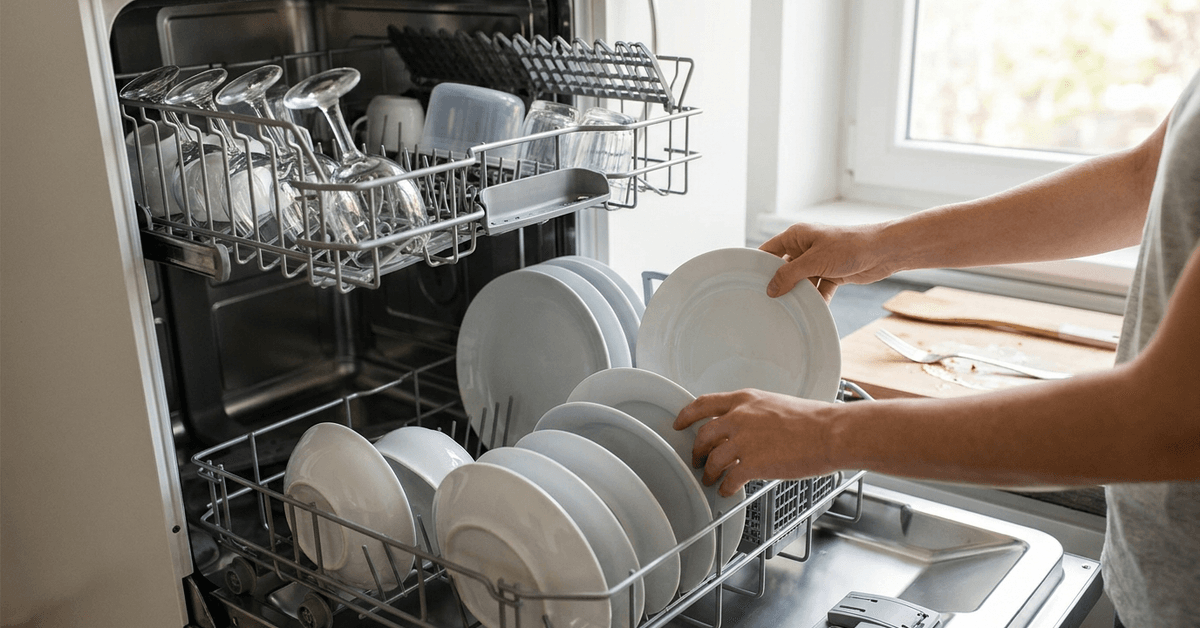
Loading a dishwasher correctly can improve cleaning results and everyday kitchen efficiency. Poor placement can leave dishes dirty, block spray arms, or force another wash.
This guide explains five practical rules covering food removal, rack placement, spray direction, spacing, and small-item security. It also covers maintenance, detergent, cycle selection, and common loading mistakes.
Why Efficient Dishwasher Loading Matters?
Efficient loading helps water and detergent reach dirty surfaces without unnecessary obstruction. A well-arranged load can reduce repeat washing and support consistent performance.
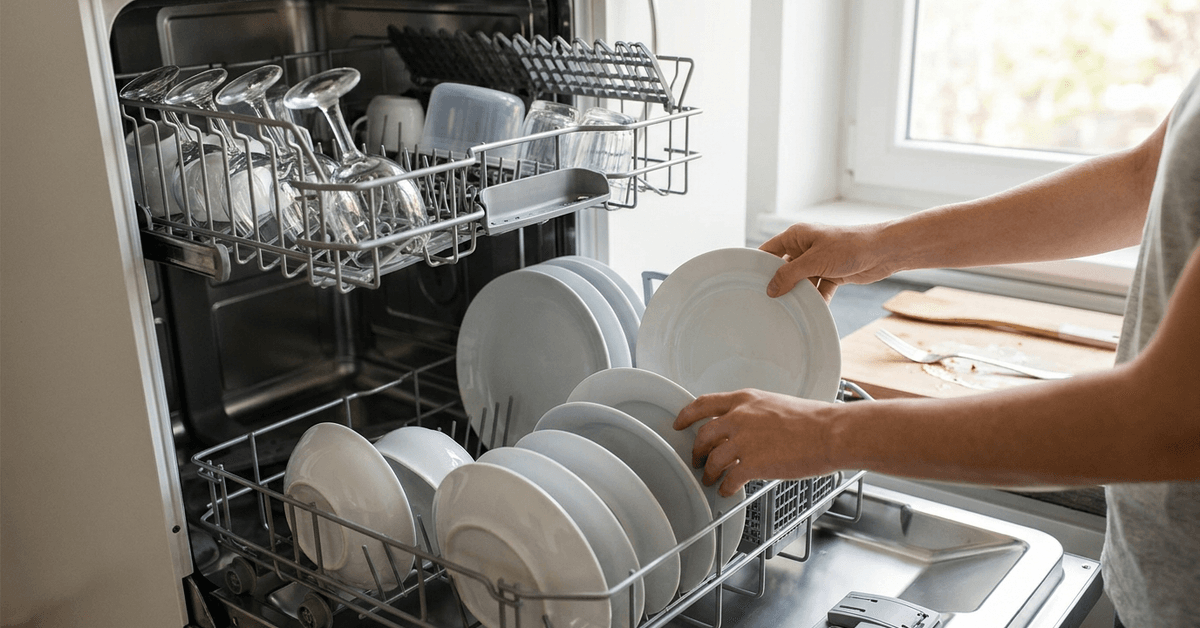
Rule 1: Scrape Off Food, Don’t Rinse Everything
Large food scraps should be removed before dishes enter the machine, while routine pre-rinsing is often unnecessary. Scraping keeps large debris away from filters while avoiding needless water use.
- Scrape bones, seeds, peels, and large food pieces into the trash or compost.
- Use a silicone spatula or fork for sticky leftovers.
- Avoid allowing thick sauces or food residue to harden.
- Load dishes promptly when practical.
- Check the filter if drainage or cleaning performance declines.
Current Bosch guidance recommends scraping large food particles before loading. The official Bosch 800 Series shows a modern dishwasher with flexible rack features and multiple cleaning options.
Rule 2: Place Items by Material and Size
Rack location matters because dishwashers provide different loading zones and clearances. Matching dishes to available rack space helps protect delicate items and keeps water pathways open.
Upper vs. Lower Rack
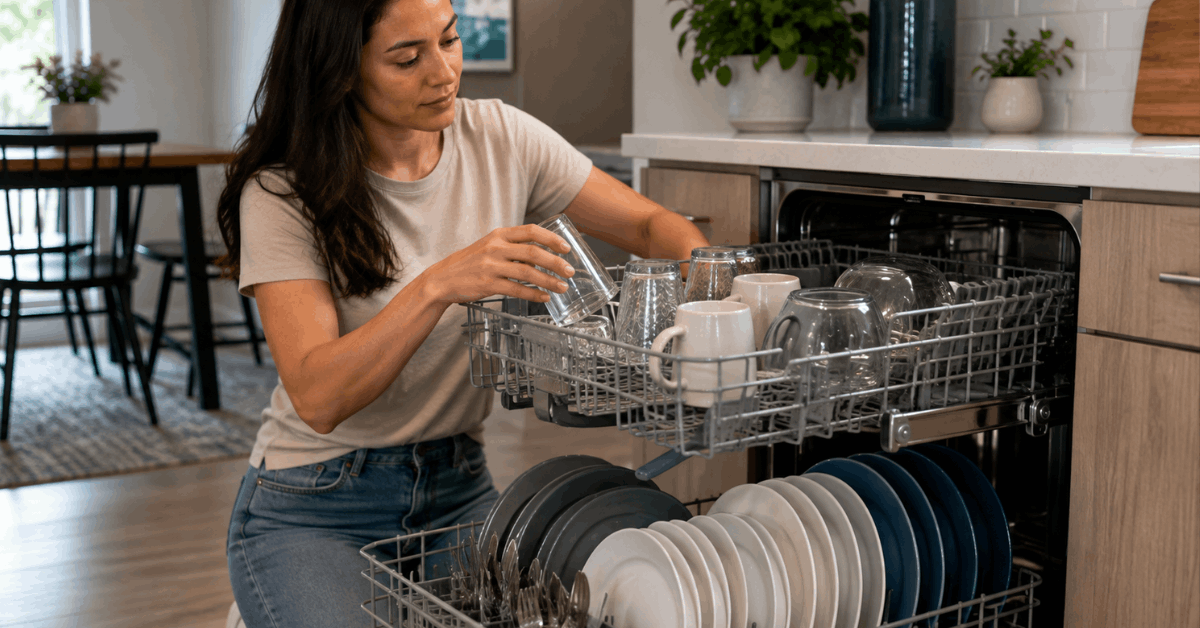
The upper rack generally suits lighter dishwasher-safe pieces, while the lower rack accommodates larger or heavier items. Always check care labels because dishwasher-safe materials and heat tolerance vary.
- Upper rack: Glasses, mugs, small bowls, and dishwasher-safe plastics.
- Upper rack: Lightweight utensils when rack design permits.
- Lower rack: Dinner plates, sturdy bowls, and serving pieces.
- Lower rack: Dishwasher-safe pots and pans that fit without blocking spray arms.
- Keep tall objects away from moving spray components.
Why This Matters
Correct rack placement helps prevent fragile pieces from moving excessively or interfering with stronger spray areas. It also allows larger dishes to sit where spacing better accommodates their shape. Check the manual because rack layouts differ between models.
Rule 3: Position Dirty Surfaces Toward the Spray Arms
Spray arms need a clear path to direct water toward food residue. Face or angle soiled surfaces inward so water can reach them without nearby blockages.
- Angle plates toward the center or main spray direction.
- Position bowls so their interiors face the spray.
- Tilt deep dishes downward so water can drain.
- Avoid nesting bowls, spoons, or containers together.
- Place utensils according to the basket or third-rack design.
- Keep sharp knives positioned safely.
Leave visible gaps between dishes whenever possible. Bosch advises avoiding overlapping items so spray access and water circulation remain effective.
Rule 4: Avoid Overcrowding and Blockages
A packed dishwasher may look efficient, but overlapping pieces can prevent water and detergent from reaching hidden surfaces. Adequate spacing also keeps dispensers and spray arms functioning freely.
- Leave enough space for water to circulate between plates.
- Avoid stacking bowls directly against one another.
- Keep tall utensils away from rotating spray arms.
- Do not block the detergent dispenser.
- Place flat lids and trays along suitable rack edges when permitted.
- Rotate spray arms before starting the cycle to check clearance.
Recognizing the Signs of Overcrowding
Persistent residue after a normal cycle can indicate dishes were too tightly packed. Water left in cups or detergent that did not disperse can also suggest poor placement. Reorganizing the load may improve cleaning access without adding detergent.
Rule 5: Secure Small Items and Check Special Compartments
Cutlery baskets and third racks keep small pieces from moving during washing. Proper placement also prevents utensil nesting and protects moving parts from lightweight items.
- Alternate spoons and forks so they do not nest.
- Place sharp knives securely according to appliance instructions.
- Use the third rack for flat utensils when available.
- Secure lightweight dishwasher-safe plastics.
- Put small accessories into approved holders or baskets.
- Confirm nothing extends far enough to block a spray arm.
Bosch notes that third racks can provide space for flatware, utensils, and small items. Using intended compartments helps keep these pieces properly separated.
Additional Tips for Dishwasher Longevity and Results
Correct loading works best with basic dishwasher maintenance and appropriate detergent use. Regular checks help filters, spray arms, and programs support reliable cleaning.
Clean the Filter Regularly
Dishwasher filters collect food particles removed during washing. Inspect and clean the filter assembly at the interval stated in the manual. A clean filter helps prevent debris from affecting wash performance or creating odors.
Use Quality Detergents
Detergent type and dosage influence how effectively food residue is removed. Choose a suitable product and consider local water hardness when following dosage instructions. Avoid adding extra detergent automatically because more detergent does not guarantee better results.
Choose the Right Cycle
Wash programs are designed for different soil levels and dish types. Select a cycle based on the actual load and care requirements.
- Eco cycles can suit normally soiled everyday dishes.
- Intensive programs are intended for sturdy, heavily soiled cookware.
- Quick programs can suit appropriate lighter loads.
- Follow the manual for sanitation or high-temperature options.
- Confirm delicate items can tolerate the selected program.
Common Mistakes to Watch Out For
Poor loading habits can reduce cleaning and drying performance while increasing the risk of damage. Avoiding a few common mistakes helps dishes come out cleaner and keeps the dishwasher working efficiently.
Loading Unsafe Items
Avoid placing wooden, insulated, or non-dishwasher-safe items in the machine. Heat and moisture can damage certain materials or finishes. Always check the manufacturer’s care instructions before loading unfamiliar items.
Overlapping or Nesting Dishes
Do not allow plates, bowls, or utensils to overlap tightly. Water and detergent need space to reach each surface. Proper spacing improves both washing and drying results.
Blocking Key Components
Keep dishes away from the detergent dispenser and spray arms. Blocked components can prevent detergent from releasing or water from circulating properly. Check that spray arms rotate freely before starting the cycle.
Securing Lightweight Plastics
Place lightweight plastic items where they cannot flip or move during washing. Loose pieces may collect water or interfere with other dishes. Use designated rack areas or secure them between stable items.
Avoiding Overfilled Racks
Do not pack racks too tightly just to avoid running another load. Overloading restricts water flow and can leave food residue behind. Leaving enough space between items usually produces better cleaning results.
Conclusion: Efficiency Builds Cleanliness and Appliance Longevity
Efficient dishwasher loading begins with scraping food, arranging racks, and directing dirty surfaces toward the spray. Proper spacing and secure placement allow water and detergent to circulate without unnecessary blockages.
Filter care, suitable detergent, and appropriate wash programs reinforce those habits. With a consistent loading routine, everyday dishwashing becomes more organized, reliable, and efficient.