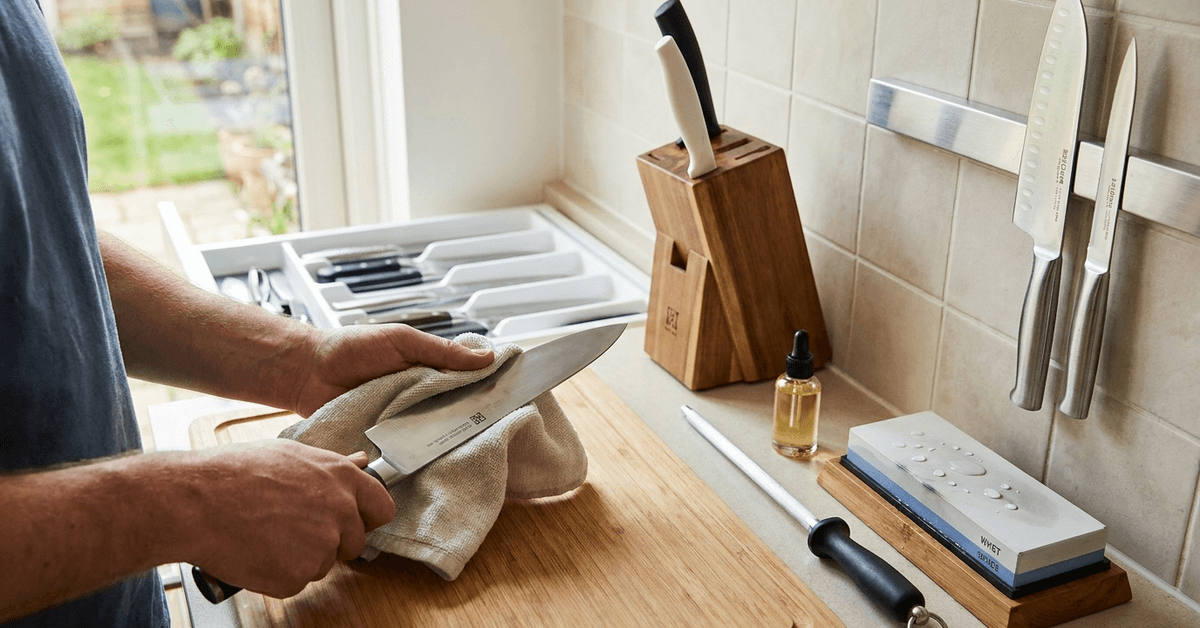
Kitchen knives are essential for efficient meal preparation and safe cooking. Consistent maintenance can extend their useful life.
This guide explains practical knife maintenance for home cooks seeking sharper blades. It covers cleaning, honing, sharpening, storage, and long-term blade care.
Why Proper Knife Maintenance Matters?
Regular care protects blade performance and supports safer cutting. Neglecting upkeep can lead to dull edges, accidents, or frequent replacement.
Proper maintenance often makes food preparation easier and creates cleaner cuts. Sharpness retention remains an important benefit of consistent care.
Choosing the Right Knives for Maintenance
Different blade materials require different levels of routine maintenance. Stainless steel, high-carbon steel, and ceramic each have characteristics for daily care.
Stainless Steel Blades
Stainless steel resists rust and staining, making it common in home kitchens. It is relatively low maintenance, although regular honing may still be needed. A WÜSTHOF Classic 8-inch Chef’s Knife is one example of a stainless-steel kitchen knife.
High-Carbon Steel Blades
Many cooks value high-carbon steel for sharpness and precision. These knives need prompt drying and occasional oiling to reduce rust. With consistent care, they can maintain a sharp cutting edge longer.

Ceramic Blades
Ceramic knives are valued for edge retention and limited sharpening needs. However, the material can chip or break if dropped or misused. They suit people seeking lower maintenance, but serious ceramic damage may require replacement.
Essential Knife Maintenance Tools
A few reliable tools simplify regular knife care. Keeping them together simplifies maintenance.
- Honing rod made from steel or ceramic
- Manual or electric knife sharpener
- Soft dish sponge
- Non-abrasive towel
- Culinary-grade blade oil for carbon steel
The honing rod helps align the blade between sharpening sessions. Most home cooks can manage routine care with a few dependable tools.
Safe Knife Cleaning and Drying
Gentle hand washing and prompt drying protect knife blades after use. Harsh cleaning, soaking, and careless storage may promote corrosion or damage.
Cleaning Routine
Hand washing gives better control around the blade and handle. Use warm water and gentle cleaning rather than harsh treatment.
- Wash knives by hand with warm water after use.
- Use a soft sponge on the blade and handle.
- Avoid dishwashers, where heat and movement can damage blades.
Drying and Storage Steps
Drying immediately keeps moisture from remaining on steel. Proper knife storage also separates blades from objects that may dull them.
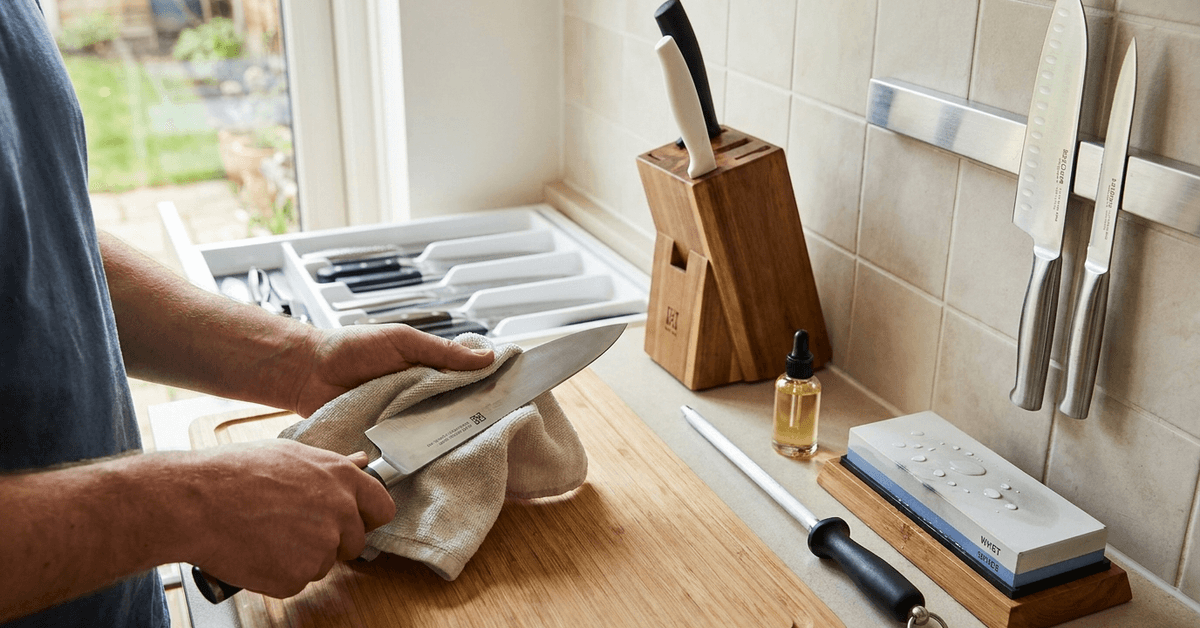
- Dry each blade with a clean, non-abrasive towel.
- Store knives in a wood block, knife guard, drawer insert, or magnetic strip.
- Keep storage areas away from excess moisture.
- Lightly oil high-carbon steel blades.
Hand washing and drying are central habits for kitchen knives. Many problems begin when moisture or poor storage affects the blade.
How Honing Works for Edge Alignment?
Honing and sharpening serve different roles in knife edge maintenance. Honing realigns the edge, while sharpening removes material to create a fresh edge.
Honing Best Practices
Correct technique maintains the edge without excessive pressure. Keep the honing angle consistent and use controlled movements.
- Hold the rod securely and place the blade around a 15 to 20 degree angle.
- Draw the knife from heel to tip a few times per side.
- Use light pressure.
- Wipe the blade after honing.
Practicing regular honing helps keep the edge aligned between sharpening sessions. Frequent cooks may hone weekly, while occasional users may need it less often.
Sharpening Techniques for Home Kitchens
Sharpening removes a small amount of metal to restore a fresh cutting edge. It should generally occur less often than routine honing.
Manual Sharpeners
Manual sharpeners provide a simple way to restore an edge. Preset guides can help maintain a consistent sharpening angle. They suit many stainless-steel and high-carbon kitchen knives.
Electric Sharpeners
Electric sharpeners save time by guiding blades through powered stages. They should be used carefully and sparingly because sharpening removes material. Following product instructions helps limit unnecessary wear.
Whetstones
Whetstones provide more control over sharpening angle and pressure. Some require soaking, while others follow different preparation instructions. Move the blade carefully across the stone at the correct angle for several controlled passes.
Frequency Guidelines for Knife Maintenance
Maintenance frequency depends on knife material, usage, cutting surfaces, and cooking habits. Assess the edge instead of sharpening automatically on a fixed schedule.
- Honing: Once weekly for regular cooks or every few uses when needed.
- Sharpening: Every few months, or when cutting becomes difficult.
- Ceramic sharpening: Infrequently, or when dullness becomes obvious.
- Edge assessment: Use a careful paper-slicing test.
A routine edge assessment helps determine whether honing or sharpening is needed. Less frequent sharpening can avoid removing unnecessary metal.
Common Knife Maintenance Mistakes to Avoid
Several habits reduce blade sharpness and lifespan even when knives are durable. Avoiding them can decrease the need for frequent sharpening.
- Storing knives loose in drawers
- Cutting on glass or stone surfaces
- Allowing food residue to dry on blades
- Leaving knives wet after washing
- Using abrasive cleaning pads
- Applying excessive sharpening pressure
Proper storage and handling strongly affect edge condition. Keeping blades away from hard surfaces helps reduce premature dulling.
Organizing Knives for Long-Term Sharpness
A dedicated storage area keeps blades separated and protected while making them easy to reach. The best system depends on kitchen space and household needs.
Smart Storage Systems
Several storage methods protect blades from unnecessary contact. Choose a system that keeps sharp edges separated and secure.
- Magnetic strips mounted in a suitable location
- Wooden knife blocks with individual slots
- Drawer inserts designed for knives
- Individual blade guards
Many users choose magnetic strips for convenience, while blocks remain popular. Storage tools should also stay clean and dry.
Extra Measures for Blade Longevity
Kitchen conditions and cutting habits influence overall blade life. Small changes can reduce wear.
- Use wood or plastic cutting boards instead of glass.
- Keep knife storage away from steam and splashing water.
- Avoid abrasive cleaning pads.
- Rotate frequently used knives when practical.
Choosing wooden cutting boards reduces repeated contact with very hard surfaces. Long-term sharpness usually comes from several small maintenance choices.
Conclusion
Maintaining sharp kitchen knives rarely requires complex tools or techniques. Gentle cleaning, prompt drying, regular honing, careful sharpening, and proper storage support reliable performance.
Consistent habits also reduce unnecessary blade wear and damage. Simple, regular care remains the key to a well-maintained kitchen knife.