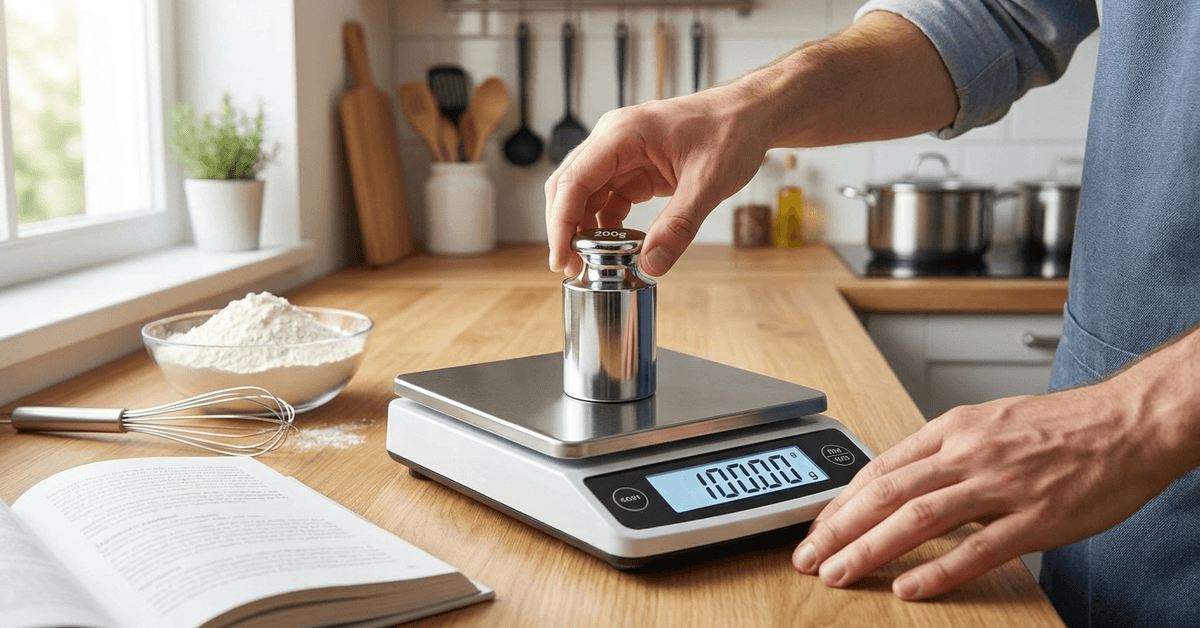
Accurate measurements support consistent baking results. This guide explains how to prepare, calibrate, test, and maintain a kitchen scale.
It also covers accuracy problems, alternative weights, cleaning, and recalibration signs. These steps can make everyday baking measurements more dependable.
Why Accurate Scale Calibration Matters?
Small measurement errors can affect recipes where ingredient ratios matter, especially flour, sugar, yeast, and liquids. Calibration helps confirm that displayed weight matches the scale’s intended measurement accuracy.
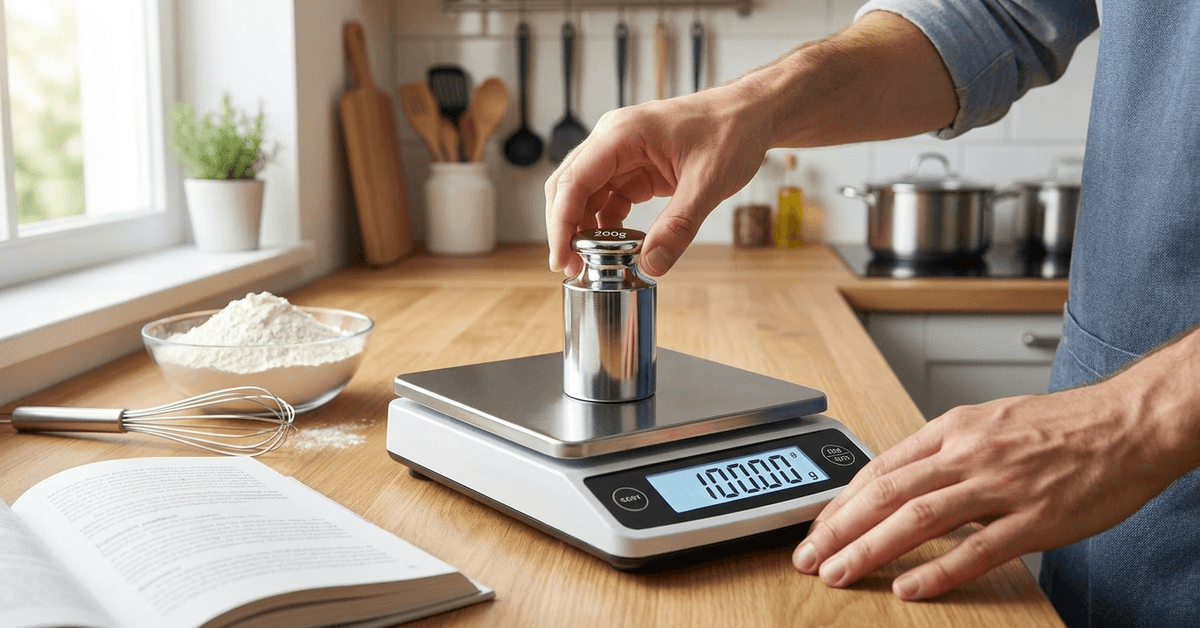
Benefits for Home Baking
Reliable weighing improves recipe consistency when ingredients are measured by mass. It is especially useful for recipes written in grams and for repeating successful batches.
- Consistently measured ingredients support predictable textures and flavors.
- Gram-based recipes are easier to follow with a dependable scale.
- Accurate measurements reduce unnecessary rechecking during preparation.
Understanding Your Kitchen Scale: Basics First
Digital kitchen scales use internal sensors to convert applied weight into a displayed measurement. Mechanical models use springs and dials, while digital models commonly offer small measurement increments.
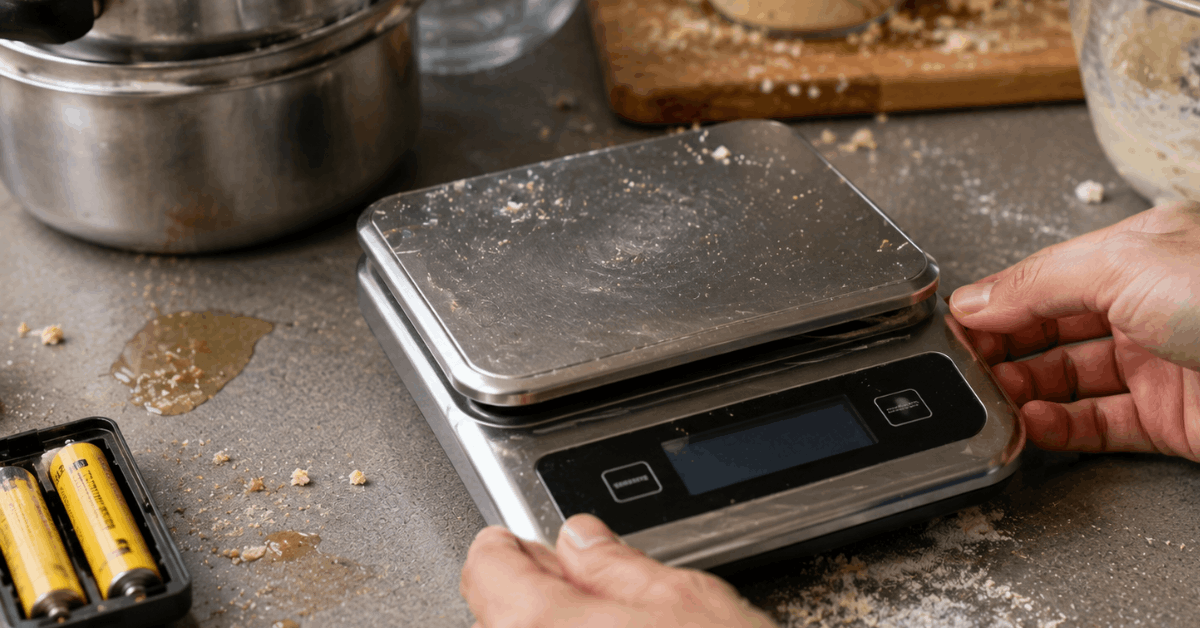
Key Appliance Parts to Know
Understanding the main parts makes calibration and routine scale care easier. Exact controls vary, so check the manual before entering calibration mode.
- Weighing platform: The flat surface where ingredients or containers sit.
- Control panel: Includes power, tare, unit, or mode buttons.
- Sensors: Internal components that register applied weight.
- Display: Shows the measured value and selected unit.
- Battery compartment: Supplies power to most digital models.
How Kitchen Scales Lose Their Accuracy?
Drops, uneven surfaces, weak batteries, residue, or frequent moving can contribute to unstable scale readings over time. Keeping the platform clean and avoiding excess weight helps reduce measurement problems.
- Heavy cookware stored on the scale may stress internal sensors.
- Crumbs or sticky residue can interfere with stable placement.
- Weak batteries may cause dim displays or inconsistent operation.
- Accidental drops can affect platform alignment.
Preparing to Calibrate: Setting Up for Success
Place the scale on a hard, level surface before calibration. Keep the area stable, dry, and free from drafts, vibration, or objects touching the platform.
What You Need Before Starting?
Calibration works best with a known reference weight matching the value requested by the scale. Fresh batteries and a clean platform also support stable readings.
- Calibration weight: Use the exact weight requested by the manufacturer.
- Fresh batteries
- Clean, dry hands
- A level countertop or sturdy table
- The scale’s instruction manual
A product such as an OXO kitchen scale shows why model-specific controls matter, since features and operating steps differ between scales.
The Step-by-Step Calibration Process
Calibration procedures vary by model, so manufacturer instructions should take priority. Use the exact calibration weight requested rather than estimating the required mass.
- Place the scale on a clean, hard, level surface.
- Turn it on and wait for the display to settle at zero.
- Press tare or zero if the instructions require it.
- Enter calibration mode using the listed button sequence.
- Wait for the required calibration weight to appear.
- Place the correct reference weight in the platform center.
- Keep the scale still while it registers.
- Wait for the completion signal or stable reading.
- Remove the weight when instructed.
- Confirm the scale returns to zero and test another known weight.
Calibrating Without Official Weights
A certified or manufacturer-specified weight provides the most reliable reference for calibration. Household objects can support a rough accuracy check, but actual weights may vary.
Alternative Calibration Weights
If you only want to check whether readings seem reasonable, some known-weight objects can provide a basic comparison. Do not substitute them when the manual requires an official calibration weight.
- Unopened packaged foods with clearly marked net weights
- Sealed canned goods with labeled contents
- Standardized coins when their official mass is known
- Another verified object weighed on a trusted scale
Potential Downsides
Everyday objects introduce more measurement uncertainty than dedicated calibration weights. Packaging, moisture, wear, and manufacturing tolerances can change the actual mass.
- Labeled package weight may refer only to net contents.
- Packaging adds weight beyond the stated food quantity.
- Condensation or residue can affect measurements.
- Coins may show wear after circulation.
Cleaning and Maintaining the Weighing Platform
Food particles and sticky residue can interfere with stable weighing conditions or prevent containers from sitting flat. Clean the scale gently and keep moisture away from seams, buttons, and electronics.
- Turn off the scale before cleaning.
- Wipe the platform with a slightly damp, lint-free cloth.
- Use mild dish soap only when approved.
- Remove crumbs from accessible edges.
- Dry the surface thoroughly before use.
- Replace batteries if the display becomes dim or unstable.
Preventing Common Issues
Simple habits protect the platform and sensors between baking sessions. Avoid using the scale as storage or exposing it to unnecessary moisture.
- Never submerge the scale unless specifically permitted.
- Disconnect power before cleaning a corded model.
- Avoid stacking heavy cookware on the platform.
- Store the scale in a dry, stable location.
How Often Should You Calibrate a Kitchen Scale?
Calibration frequency depends on how often the scale is used, its design, and the level of accuracy required. Regular checks can help keep measurements consistent for cooking and baking.
Check for Inconsistent Readings
Repeated measurements of the same object should produce similar results. Differences between readings may indicate that the scale needs recalibration. Check the manufacturer’s instructions before making adjustments.
Recalibrate After Changes or Impact
A drop, bump, or move to a different surface can affect scale accuracy. Battery replacement may also be a good time to verify readings. Place the scale on a flat, stable surface before testing it again.
Watch for Baking Inconsistencies
Unexpected changes in baking results may sometimes point to inaccurate measurements. Confirm that the display returns reliably to zero before weighing ingredients. Recalibrate the scale if readings continue to appear inconsistent.
Tips for Long-Term Scale Accuracy and Longevity
Careful storage and regular cleaning help protect measurement reliability over time. Treat the scale as a precision tool rather than a countertop shelf.
- Avoid storing heavy cookware on the platform.
- Keep the scale in a dry location.
- Let the scale reach room temperature before use.
- Replace weak batteries promptly.
- Keep the platform free of crumbs.
- Stay within the maximum weight capacity.
- Recheck accuracy when readings appear unusual.
Conclusion: Consistency in Baking Starts With Calibration
A calibrated kitchen scale supports more consistent baking by improving confidence in ingredient measurements. Proper setup, suitable reference weights, and model-specific instructions make calibration easier.
Regular cleaning, careful storage, and timely battery replacement help preserve long-term scale accuracy. With a simple maintenance routine, bakers can rely on their scale for repeatable recipes.