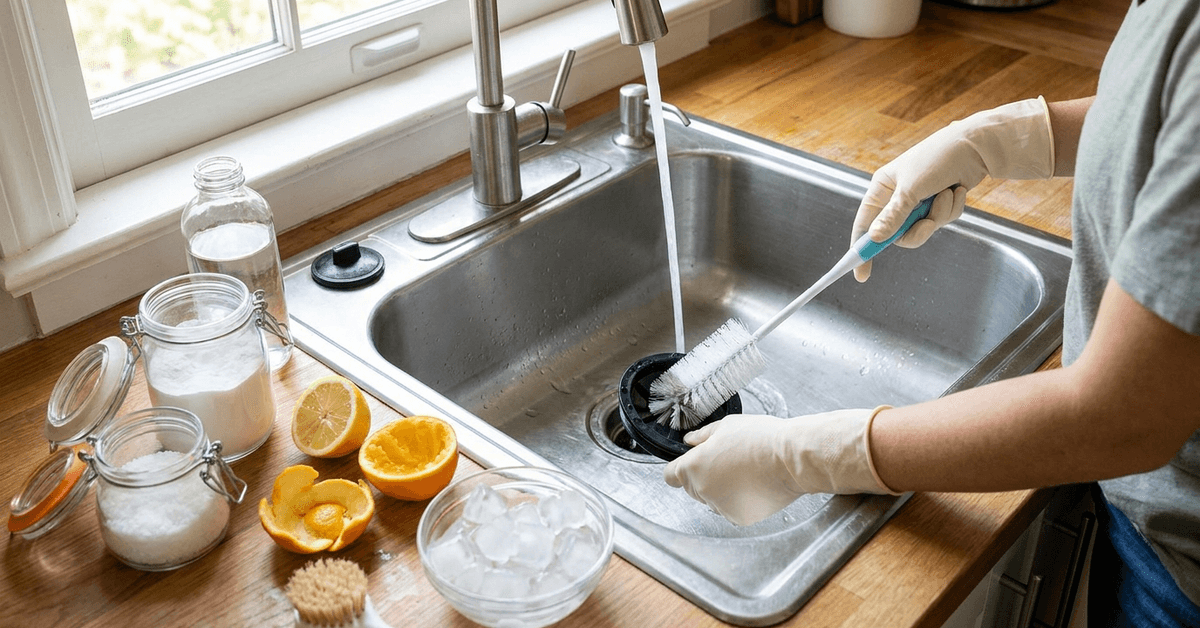
Maintaining a garbage disposal naturally can help prevent persistent kitchen odors, stubborn buildup, and appliance problems. This guide explains how to clean key parts with simple household materials.
It also covers safe preparation steps, maintenance habits, troubleshooting, and items to avoid. These methods can support a cleaner, dependable kitchen without harsh chemicals.
Why Natural Cleaning Matters for Garbage Disposals?
Natural cleaning methods use gentle household ingredients to loosen residue while avoiding unnecessarily harsh products around food-preparation areas.
Manufacturer instructions should still guide approved cleaning methods because disposal materials, seals, and maintenance requirements vary by model.
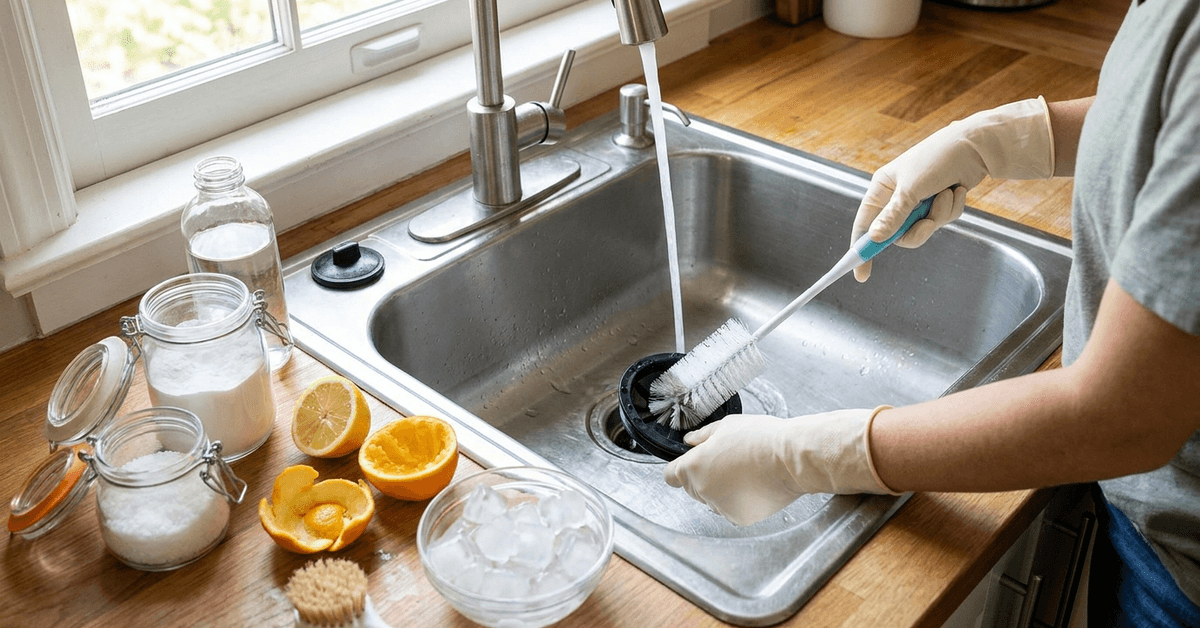
Understanding the Anatomy: Main Garbage Disposal Parts to Clean
Effective maintenance focuses on areas that collect residue, and a product such as InSinkErator shows the typical under-sink design of a household food waste disposer.
Model construction varies, so follow the specific product manual before removing parts or cleaning accessible components.
- Splash guard at the sink opening
- Grinding chamber beneath the splash guard
- Rotating plate and grinding components
- Drain passage at the bottom
- Accessible mounting and drain connection areas
Step-by-Step: How to Clean a Garbage Disposal Naturally
A safe routine begins with power control and gentle tools. Work through accessible areas in order so debris can be removed without unnecessary handling.
Gathering Essential Cleaning Materials
Common household materials are usually enough for basic disposal cleaning. Gather everything before starting to keep the process organized.
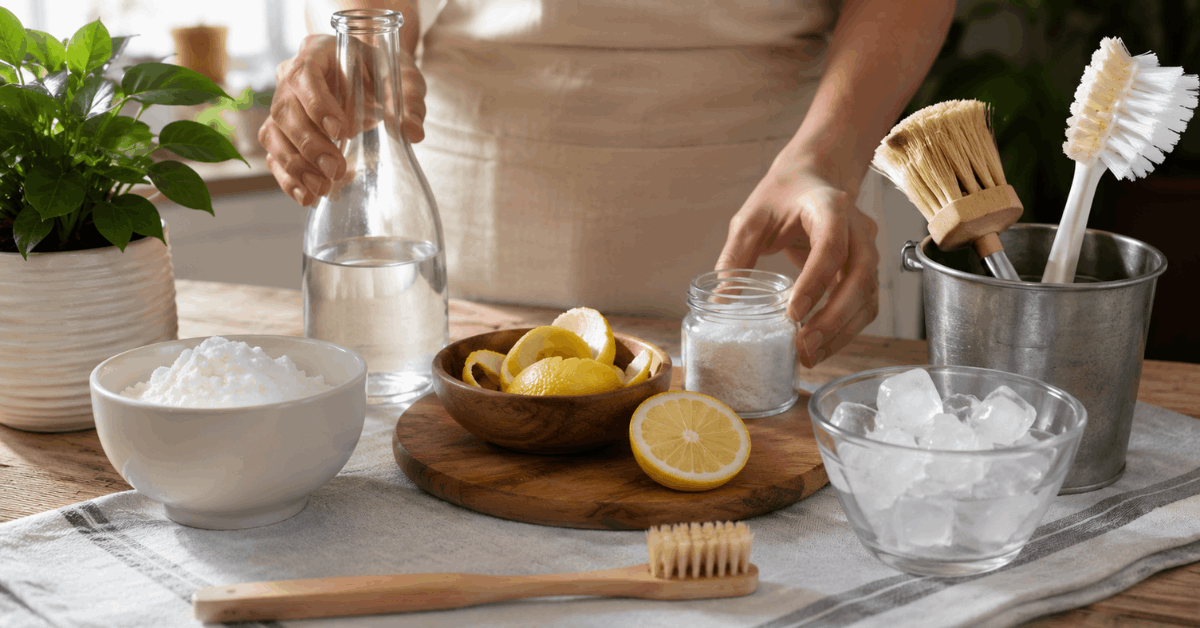
- Baking soda for deodorizing
- White vinegar when permitted
- Lemon or citrus peels when approved
- Coarse salt
- Ice cubes
- Mild dish soap
- Old toothbrush or long-handled brush
- Flashlight and protective gloves
Pre-Cleaning Preparation
Disconnect electrical power at the breaker or unplug the unit if possible. Confirm that the disposal cannot start before touching the splash guard or chamber. Use gloves and a flashlight to inspect the area without placing fingers inside.
Cleaning the Splash Guard and Upper Chamber
Remove the splash guard only if the manufacturer identifies it as detachable and washable. Scrub both sides with warm water, mild dish soap, and a soft toothbrush to remove greasy film. For fixed guards, clean accessible undersides while the power remains disconnected.
Deodorizing and Cleaning the Grinding Chamber
Pour a small amount of baking soda into the chamber, followed by white vinegar if permitted. Let the mixture foam briefly so it contacts residue along accessible surfaces. Rinse afterward using water at the temperature recommended by the manufacturer.
Scrubbing Internal Surfaces
Use a long-handled brush to reach accessible chamber walls without putting your hands inside. Work gently around the underside of the splash guard and other reachable surfaces. Never insert fingers into the chamber, even when the electrical power is off.
Cleaning With Ice and Salt
Ice and coarse salt can help loosen soft debris and residue when the manufacturer permits their use.
They do not sharpen blades because many disposals use grinding components rather than conventional cutting blades. Restore power only after tools are removed, then run cold water as directed.
Using Citrus Peels for a Fresh Scent
Small citrus pieces may provide a temporary fresh scent in compatible disposals. Use only small amounts because thick peels create more waste for the unit to process. Run cold water and follow manufacturer food-waste guidance during operation.
Maintenance Tips to Prevent Odors and Clogs
Everyday habits can reduce grease and food residue inside the disposal. Consistent maintenance is easier than waiting for a serious clog or odor.
Smart Everyday Habits
Good habits protect the disposal and drain line. Use the appliance only for suitable scraps and keep water flowing as recommended.
- Run cold water while using the disposal.
- Avoid pouring grease, fats, or oils into the drain.
- Feed food waste gradually instead of all at once.
- Limit fibrous or starchy scraps that may contribute to jams.
- Rinse the chamber after use.
- Clean accessible surfaces regularly.
Monthly Deep Cleaning Routine
A monthly inspection helps identify hidden residue and odors before buildup becomes difficult.
Clean the splash guard, brush accessible surfaces, and use an approved deodorizing method. Adjust the schedule when frequent use creates faster buildup.
What Not to Put in a Garbage Disposal?
Some materials are more likely to create clogs or mechanical problems than ordinary soft food waste. Disposal capabilities differ, so use the manual as the final guide for unsuitable items.
- Grease, fats, and cooking oils
- Large bones or fruit pits
- Fibrous vegetable scraps in large amounts
- Large quantities of potato peels or pasta
- Non-food materials
- Excessive amounts of waste at once
Troubleshooting Common Garbage Disposal Problems Naturally
Basic maintenance may solve minor odor or drainage problems, but mechanical faults require caution. Disconnect power before inspections and stop if the problem involves wiring, leaks, or damaged components.
If Odors Linger
Persistent odors may come from food residue under the splash guard or inside the chamber. Clean accessible areas again and rinse thoroughly after treatment.
If the smell continues, inspect the connected drain or seek professional help instead of adding stronger chemicals.
If the Disposal Won’t Drain
Standing water can indicate a drain blockage or disposal jam. Turn off power and follow the manufacturer’s reset and jam-clearing instructions instead of reaching inside. If drainage does not improve, a plumber can check the drain connection safely.
Slow Performance or Unusual Noises
Unusual sounds may indicate a foreign object or mechanical issue inside the disposal. Disconnect power and inspect with a flashlight, using tongs for visible removable debris when appropriate. Request service if noises continue after the obstruction is removed.
How to Extend Appliance Lifespan With Natural Care?
Regular cleaning helps limit odor-causing residue and buildup, while correct use reduces unnecessary strain from unsuitable scraps.
Gentle maintenance combined with manufacturer operating guidance and prompt attention to jams or leaks can support dependable long-term use.
Conclusion: Keeping Your Garbage Disposal Fresh and Functional
A natural routine can help keep a garbage disposal cleaner without relying on harsh chemicals. Safe power control, gentle brushing, regular rinsing, and suitable food-waste habits support reliable everyday operation.
Cleaning accessible parts consistently also makes odors and buildup easier to manage. With simple maintenance habits, homeowners can protect the disposal, plumbing, and overall kitchen routine.