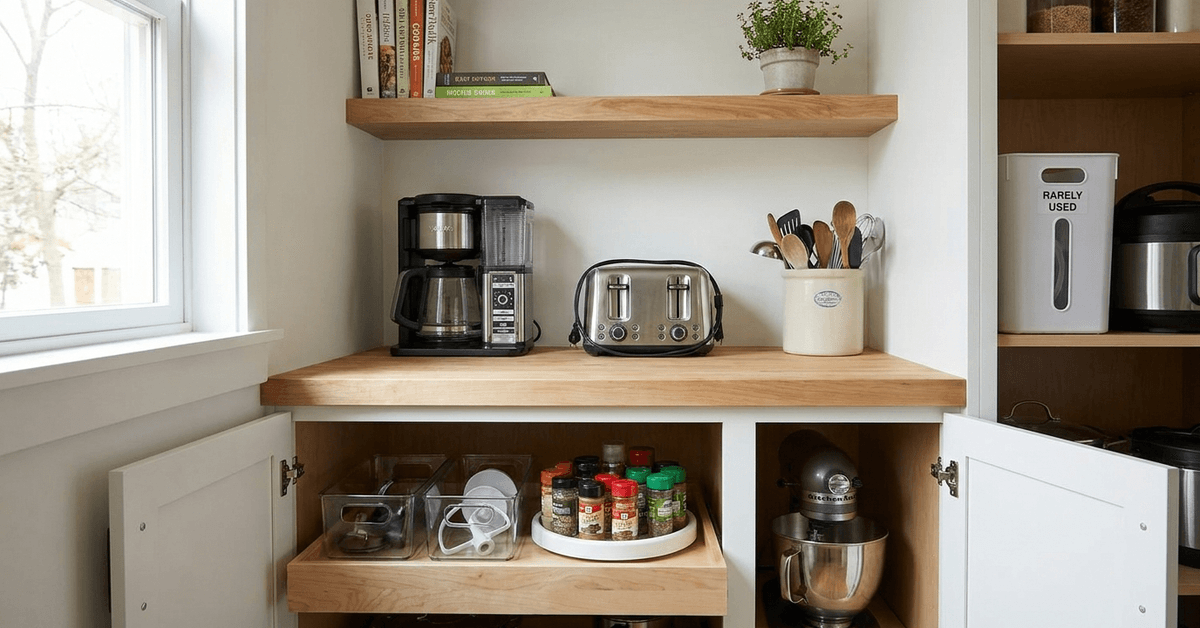
Managing small appliances well can improve kitchen workflow and keep counters easier to clean. Limited surfaces can quickly feel crowded when several gadgets compete for space.
This guide explains how to sort, place, store, clean, and manage appliances according to use. It also covers cord control, cabinet storage, and habits for maintaining a tidier workspace.
Understanding Countertop Constraints and Appliance Needs
Every kitchen has different counter dimensions, outlets, and storage limits that affect placement. Evaluating space alongside usage frequency helps determine which essential appliances deserve easy access.
Identifying Daily Use Appliances
A coffee maker, toaster, or microwave often supports everyday routines. Keeping frequently used items accessible reduces unnecessary lifting and cabinet movement.
Weekly-use tools such as blenders or food processors can stay nearby without occupying prime counter space.
Recognizing Limited Countertop Surfaces
Sinks, cooktops, and preparation zones can reduce usable countertop space. Measuring uninterrupted surfaces provides a clearer picture of what is actually available. Preserving enough open prep space should remain a priority.
Quick Decluttering: Sorting and Paring Down
Removing unnecessary appliances creates immediate space and simplifies organization. Sorting by frequency and condition also identifies unused gadgets that can move elsewhere.
Decluttering Steps
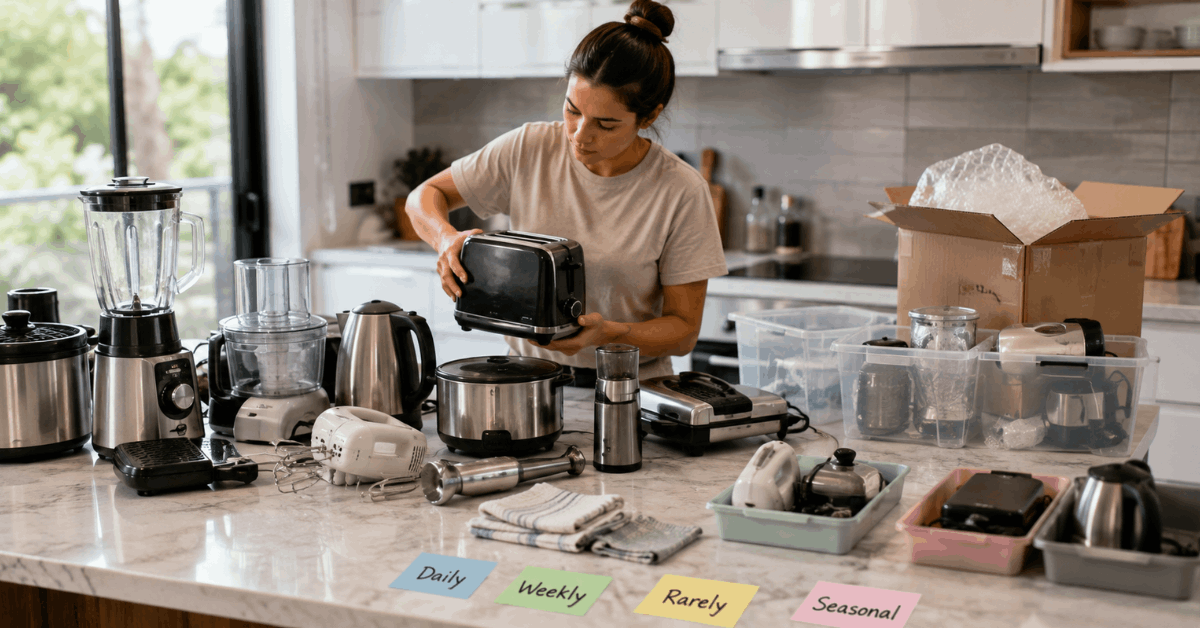
Starting with a clear surface makes available space easier to assess. Group appliances systematically before returning anything to the counter.
- Empty the countertop completely so you can start fresh.
- Wipe surfaces to remove dust, crumbs, grease, or stains.
- Sort appliances into daily, weekly, rarely used, and seasonal groups.
- Set aside duplicate or nonfunctional gadgets for donation, recycling, or repair.
Strategic Placement: Creating Appliance Zones
Dedicated zones can reduce countertop clutter and support efficient routines. Match appliances with the preparation area, storage space, and nearby outlet they need.
Frequently Used Appliances
Daily appliances work best where they support the normal routine without blocking food preparation. Coffee makers may fit near mugs and water access, while toasters can sit near a breakfast station.
When comparing countertop tools, KitchenAid offers several appliance categories that can help identify which items suit regular use.
Occasional-Use and Specialty Devices
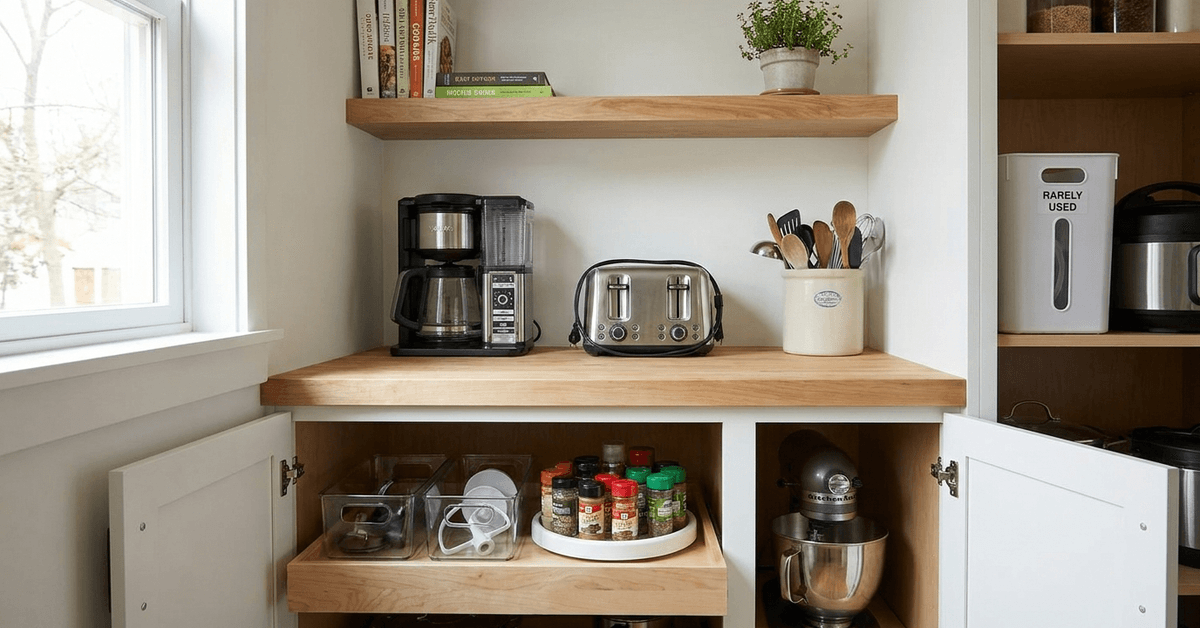
A mixer, air fryer, or slow cooker may only be needed weekly. Storing these in a nearby cabinet or pantry keeps them accessible without taking permanent counter space. Lower shelves or sturdy pull-outs can make heavier specialty appliances easier to retrieve.
Vertical and Corner Solutions
Corners and vertical areas can provide extra storage potential without consuming the main work zone. Choose stable solutions that match appliance size and weight.
- Use corner appliance shelves to utilize awkward spaces.
- Add vertical stacking shelves for lightweight items when safely supported.
Clever Storage Accessories for Countertop Management
Storage accessories can organize appliances while preserving valuable surface area. Select options according to weight, cabinet dimensions, and daily accessibility.
Pull-Out Trays and Bins
A pull-out appliance tray can make gadgets easier to access from cabinets or deep corners. Bins can group attachments, manuals, and accessories together. Keeping related pieces in one place supports a cleaner setup.
Lazy Susans
A rotating tray can improve access to several small items in a deep corner. Turning the platform may be easier than moving objects from the front. Choose a stable tray with enough clearance for the stored appliances.
Appliance Lifts
Built-in appliance lifts can raise heavy mixers from base cabinets to working height. They can reduce repeated lifting while freeing counter space. Installation should account for cabinet strength, appliance weight, and hardware capacity.
Optimizing Cord and Cable Management
Loose cords can make counters look crowded and complicate surface cleaning. Simple cord-control methods keep cables organized around electrical outlets.
Cord Wraps
Cord wraps or clips can contain excess power cord length behind an appliance. Leave enough cable free to reach the outlet without tension. Avoid tightly bending or pinching cords around hot surfaces.
Under-Cabinet Power Strips
An under-cabinet power strip can reduce cables crossing preparation areas when installed appropriately. Positioning outlets near appliance zones supports a cleaner arrangement. Electrical products should always follow their ratings and safety instructions.
Cabinet and Drawer Storage for Rarely Used Appliances
Rarely used appliances often belong off the countertop to preserve daily work space. Cabinets, pantry shelves, and deep drawers can keep them accessible without sacrificing counter space.
Labeled Storage Bins
Stackable labeled bins can group small accessories and occasional-use gadgets by purpose. Clear labels make stored pieces easier to locate. Choose bins that fit shelf depth while allowing safe handling.
Shelving Configurations
Adjustable shelving accommodates appliances and attachments with different heights. Thoughtful arrangements also prevent small pieces from becoming difficult to find.
- Adjust shelves to fit taller appliances without wasting vertical space.
- Use drawer dividers for beaters, cords, blades, and removable attachments.
Routinely Cleaning and Maintaining the Countertop
Regular cleaning helps maintain an organized layout after appliances receive assigned locations. Moving items periodically prevents crumbs, moisture, and grease from collecting in hidden areas.
Step-by-Step Counter Wipe-Down
Cleaning one area at a time makes countertop maintenance easier to manage. Follow appliance instructions before moving or cleaning electrical equipment.
- Unplug and move each appliance as appropriate.
- Wipe underneath and around it to remove crumbs, stains, or moisture.
- Clean trays and accessories that collect dust or grease.
- Return appliances to assigned zones after surfaces dry.
Cleaning Appliance Exteriors
A damp microfiber cloth suits many appliance exteriors when manufacturer guidance permits it. Avoid soaking controls, vents, plugs, or electrical openings. Use approved cleaners and dry surfaces afterward.
Simple Hacks to Remove Ink Stains from Fabric Quickly
Kitchen aprons or towels may develop ink stains from pens or recipe notes. Prompt treatment can improve removal while protecting the surrounding fabric.
Recommended Steps
Different fabrics and inks respond differently, so check the care label first. Test unfamiliar products on a hidden area before treating the visible stain.
- Act quickly before the stain sets further.
- Place an absorbent paper towel beneath the stain.
- Dab with rubbing alcohol or a suitable fabric stain remover.
- Blot instead of rubbing to limit spreading.
- Launder according to the care label and check before drying.
Conclusion
Maximizing countertop space depends on appliance use, kitchen layout, and available storage. Prioritizing daily gadgets while relocating occasional items creates a more functional workspace.
Cord organization, cleaning, and thoughtful storage accessories make the arrangement easier to maintain. With a consistent organization system, kitchen surfaces can stay ready for preparation and everyday tasks.