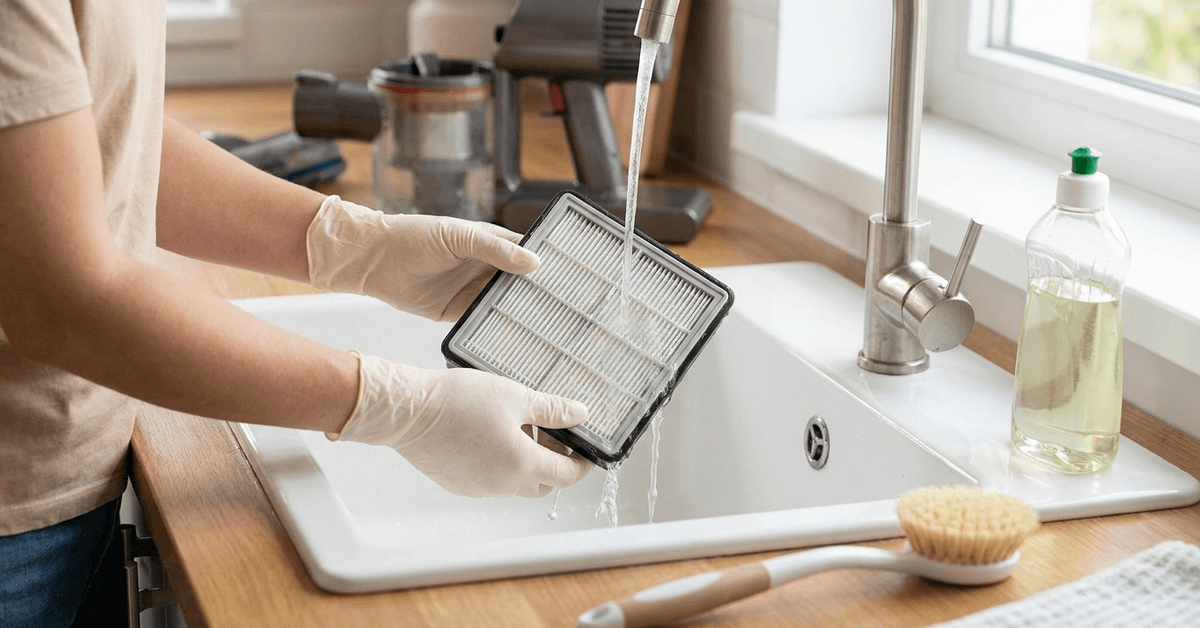
Regular cleaning of a vacuum HEPA filter can support suction and help the appliance work efficiently. However, cleaning methods differ because some filters are washable while others require replacement.
This guide explains how to identify your filter type, remove dust safely, wash approved filters, dry them correctly, and reinstall them. It also covers maintenance frequency, replacement signs, common mistakes, and habits that can extend filter life.
Understanding HEPA Filters in Vacuum Cleaners
HEPA filters are designed to capture fine airborne particles as air moves through the vacuum. Because materials vary, identifying the specific filter before cleaning is essential.
HEPA stands for High Efficiency Particulate Air and describes a high-filtration design used in many vacuum cleaners.
Pleated filter material captures small particles from the airflow before air leaves the machine. Manufacturers use different filter materials and seals, so one cleaning method does not suit every model.
Types of HEPA Filters
Vacuum HEPA filters generally fall into washable or replace-only categories. Check markings on the filter or manual before exposing it to water.
- Washable filters: Designed for approved rinsing and reuse.
- Non-washable filters: Require dry care or replacement according to the manufacturer.
Why Safe Cleaning Matters?
HEPA material can be delicate and damaged by rough scrubbing, harsh chemicals, or incorrect washing. Safe handling protects the filter structure and limits the release of trapped dust.
Reduced suction, visible dust buildup, or unusual odors can suggest that maintenance is needed. Similar symptoms may come from a full bin or blocked hose, so checking the airflow path is useful.
Essential Tools and Supplies
Most routine filter care requires only basic household tools. Gather supplies before opening the vacuum so dust can be handled with less mess.
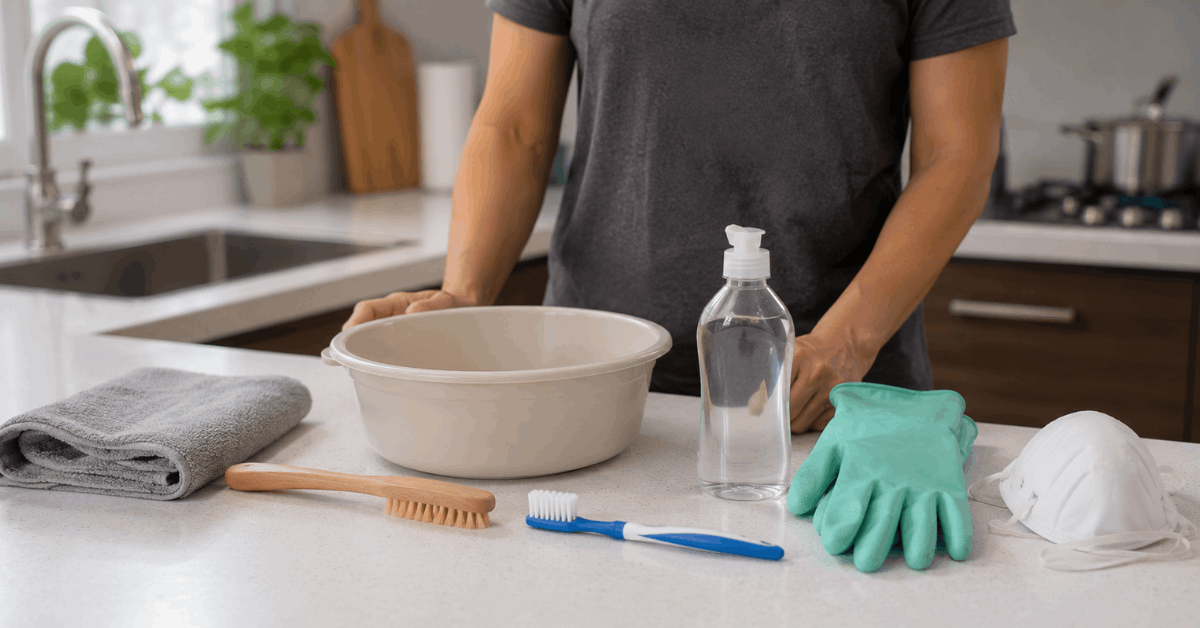
- Soft-bristle brush
- Mild dish soap, only if approved
- Basin or sink with lukewarm water
- Clean, dry towels
- Protective gloves or dust mask when preferred
Step-by-Step Safe Cleaning Process
A careful sequence keeps the vacuum powered off, limits dust release, and protects the filter. Complete each stage before moving to washing, drying, or reassembly.
1. Power Down and Unplug
Switch off the vacuum and disconnect it from electrical power before opening the filter compartment. Place the machine on a stable surface with enough room for maintenance. This step protects the user and appliance components.
2. Access the HEPA Filter
Locate the compartment using the model manual or markings on the vacuum. Open the panel carefully without forcing plastic clips. Remove the filter slowly so dust and debris do not scatter.
3. Inspect Your Filter Type
Look for washable, rinseable, or replace-only wording on the filter label. If instructions are unclear, use the vacuum model number to confirm the correct method. Never assume a filter can be washed because its outer material appears durable.
4. Dry Cleaning
Dry cleaning can remove loose surface dust when gentle tapping or brushing is permitted. Work over a bin or outdoors when practical to keep debris contained.
- Tap the filter lightly only when instructions allow it.
- Use a soft-bristle brush on accessible pleats.
- Avoid sharp tools, aggressive scraping, or compressed air unless approved.
5. Wet Cleaning for Washable Filters Only
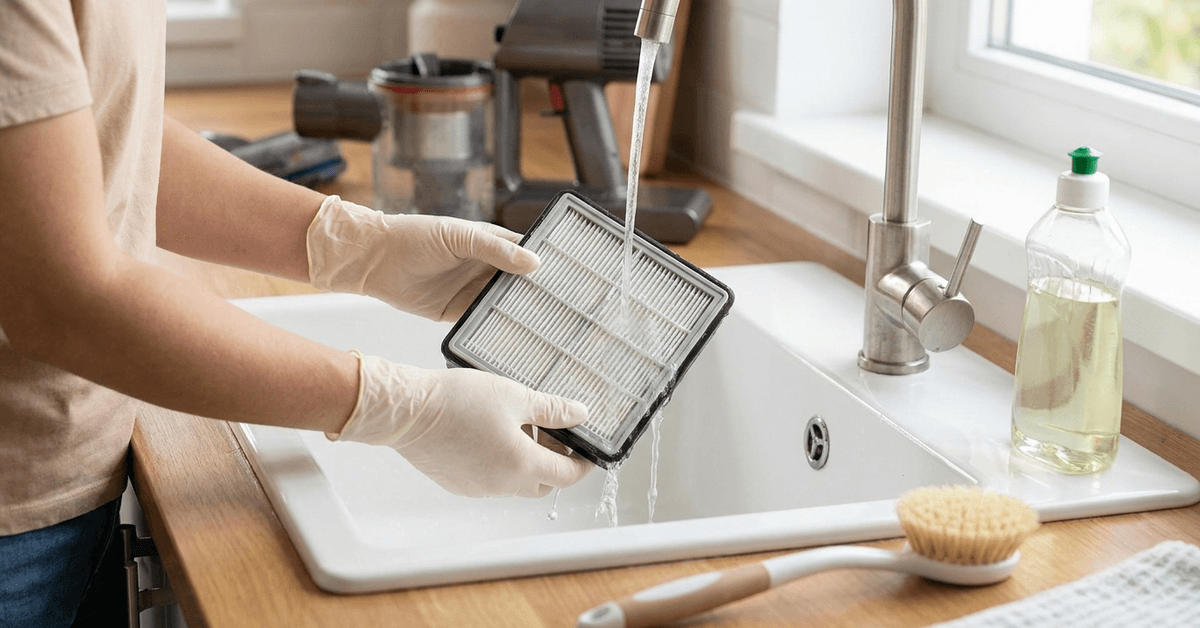
Only filters identified as washable filters should be rinsed with water. Handle them gently and avoid scrubbing pleats unless the manual directs it.
- Rinse with lukewarm water according to the recommended flow direction.
- Use mild soap only if the manufacturer permits it.
- Avoid hot water, bleach, and harsh chemicals.
- Never immerse electrical or non-washable components.
6. Drying the Filter Thoroughly
A rinsed filter must be completely dry before returning to the vacuum. Place it in a clean, ventilated area for the drying period stated by the manufacturer. Reinstalling a damp filter can introduce trapped moisture.
7. Reassembly
Return the dry filter in its correct orientation and make sure it sits securely. Close all latches or panels without forcing them. Do not run the vacuum without its filter unless manufacturer instructions specifically allow it.
How Often Should a HEPA Filter Be Cleaned?
Cleaning frequency depends on vacuum usage, pets, dust levels, filter design, and manufacturer guidance. Regular checks make it easier to spot buildup before airflow performance declines.
Homes with pets or heavy traffic may need more frequent checks than lightly used spaces. Clean or replace the filter according to the manual rather than assuming one universal schedule fits every vacuum.
Common Mistakes to Avoid
Incorrect methods can damage filter media or restrict airflow. Avoid these mistakes and prioritize model instructions whenever general advice differs.
- Washing a filter marked non-washable
- Using bleach, solvents, or harsh chemicals
- Scrubbing delicate pleats aggressively
- Reinstalling a damp filter
- Using sharp objects to remove embedded debris
When Is It Time for a New Filter?
Cleaning cannot restore a filter with physical damage, permanent clogging, or an expired service life. Regular inspection helps distinguish ordinary dirt from replacement-level wear.
Signs of Wear
A worn filter should be replaced rather than repeatedly cleaned. Watch for changes showing the filter structure is no longer in good condition.
- Persistent odor after approved cleaning and complete drying
- Tears, holes, or distorted pleats
- Reduced suction after other airflow blockages are cleared
Filter Brand Considerations
Using the correct replacement helps preserve proper fit and filtration for the vacuum model. For example, Dyson sells an official replacement filter for compatible V15 Detect and V11 vacuums. Always verify the part number and model compatibility before ordering a filter.
Extra Tips for Prolonging HEPA Filter Life
Good habits reduce the amount of dust reaching the HEPA filter. Keeping upstream components clean can also support steady airflow.
- Empty the dust bin before it becomes overfilled.
- Clean pre-filters according to the vacuum manual.
- Remove hair and debris from accessible airflow areas.
- Store spare filters in a clean, dry container.
- Let washable filters dry fully before installation.
Conclusion
Caring for a vacuum HEPA filter starts with identifying whether the filter is washable and following model-specific instructions. Gentle dust removal, approved rinsing, and complete drying help protect the filter from avoidable damage.
Regular inspection makes it easier to recognize when cleaning is no longer enough and replacement is necessary. With consistent maintenance, the vacuum can maintain dependable airflow and filtration while avoiding preventable filter problems.