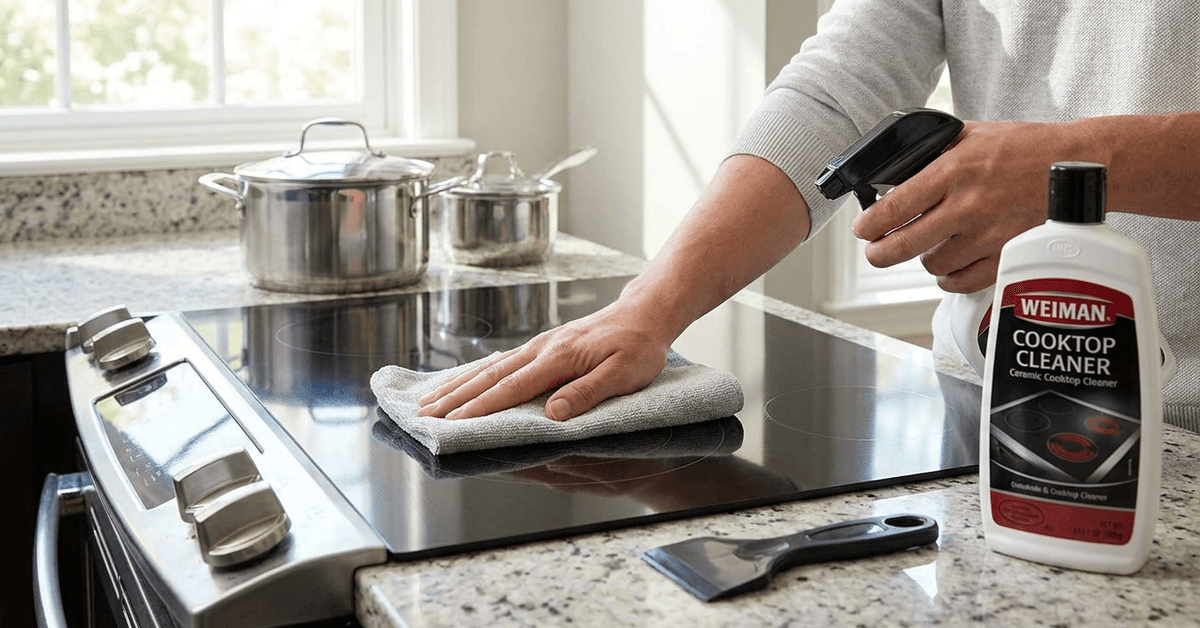
Glass stovetops are efficient and attractive, yet they require thoughtful care. Quite a few homeowners worry about damaging that smooth surface. The good news is, there are proven ways to maintain both performance and shine.
This guide is ideal for busy families, solo cooks, and anyone valuing appliance longevity. A reliable approach helps preserve that like-new look while keeping kitchen routines fast and frustration-free.
Understanding Glass Stovetops
Most modern glass stovetops use ceramic glass, a smooth material that heats quickly and cools fast. It’s durable—but not indestructible.
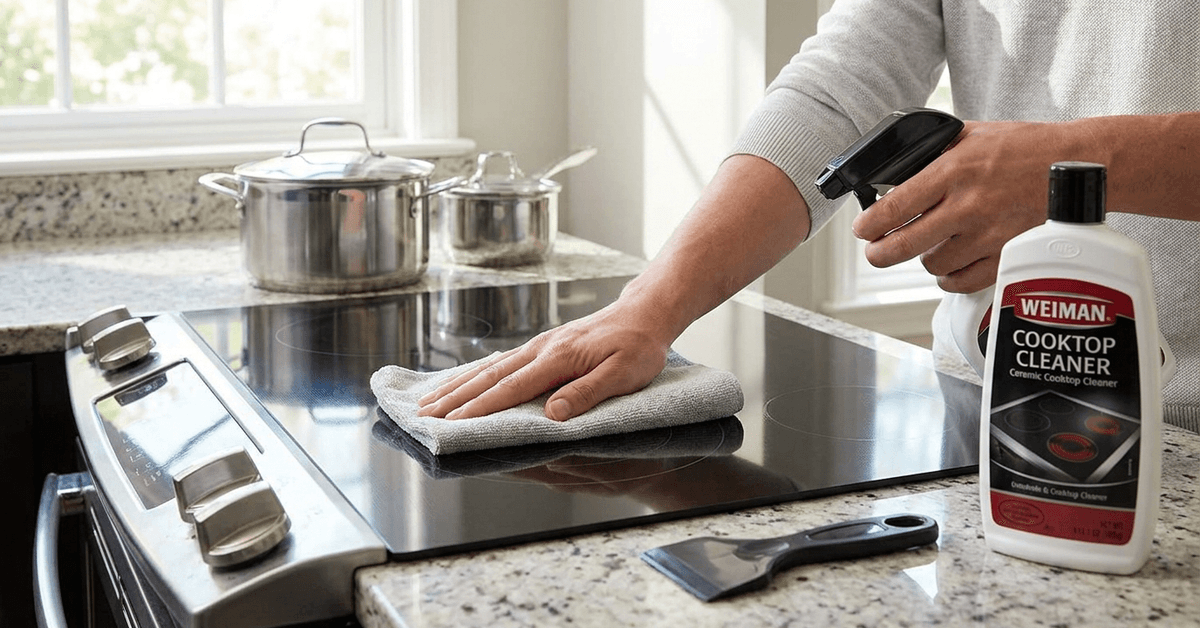
Major brands include Whirlpool, GE, Samsung, and Bosch. Regardless of the brand, the care routine for glass is quite similar.
Common Enemies of a Glass Surface
- Sugar spills, which can harden and etch the surface if left for too long.
- Cooked-on food debris, which acts as a mild abrasive if scrubbed aggressively.
- Scouring pads with metal or rough fibers, which scratch the finish instantly.
Preparation: What to Use and What to Avoid
Safe cleaning starts with the right materials. Not every sponge, cleaner, or cloth is suitable for glass.
Approved Cleaning Tools
- A soft microfiber cloth (non-abrasive)
- Ceramic cooktop cleaner (found at major supermarkets or appliance shops)
- A non-metallic scraper or plastic razor blade for tough spots
- Paper towels for drying and buffing
Materials to Avoid
- Steel wool, scouring pads, or any abrasive sponge
- Bleach, ammonia, or harsh chemical cleaners
- Regular kitchen knives for scraping
Quick Daily Cleaning Routine
Consistent, gentle maintenance can keep your stovetop in excellent shape. This routine tends to prevent buildup and makes deep cleanings rare.

- Let the glass surface cool down fully. Cleaning when warm increases the risk of burn or scratch.
- Dampen a soft cloth with warm water. Wipe away loose crumbs or splatters gently.
- Apply a small amount of ceramic cooktop cleaner directly onto the glass. Spread it evenly with a microfiber cloth.
- Buff gently in a circular motion. Avoid excess pressure, as it’s unnecessary for fresh spills.
- Polish with a clean, dry cloth for a streak-free shine.
Addressing Stubborn, Burnt-On Residue
Burnt-on food and spills can become difficult to remove once they harden. Gentle cleaning methods can help loosen residue without damaging the surface.
Soften Burnt-On Residue
Sprinkle baking soda over the affected area and cover it with a warm, damp cloth. Let it sit for about 15 minutes to soften hardened food or sauce. Wipe gently in small circular motions without applying excessive pressure.
Try Homemade Cleaner Options
A 1:1 mixture of white vinegar and water can help clean everyday spots. Soda water may also loosen fresh marks when left on the surface for a few minutes. Use a soft cloth for wiping and avoid aggressive scrubbing with paper towels.
What to Do After Heavy Cooking?
Parties, batch cooking, and spills can make a mess quickly. Immediate action helps prevent permanent blemishes.
- Let the surface cool fully before touching. Safety is a priority.
- Carefully remove loose burnt food with a soft damp cloth.
- For stuck spots, dab a bit of ceramic cooktop cleaner and let it sit for up to 10 minutes.
- Buff gently. Avoid attempting to force off stubborn bits in a single pass. This often leads to micro-scratches.
Protecting Your Glass Stove from Future Scratches
Simple daily habits can help preserve a glass stovetop and reduce surface damage. Careful cookware handling is especially important during cooking and cleaning.
Lift Cookware Instead of Sliding
Always lift pots and pans when moving them across the stovetop. Sliding cookware can drag trapped particles across the glass and cause scratches. Use flat-bottomed cookware for smoother, more even contact.
Keep Cookware and Surfaces Clean
Check the bottoms of pots and pans before placing them on the stove. Remove salt, crumbs, or other debris that could scratch the surface. Keeping cookware bases clean and smooth can help protect the glass over time.
Appliance-Safe Cleaning Products: Examples
There are several trusted brands for glass stovetop maintenance. Many homeowners find these deliver reliable, repeatable results.
- Weiman Cooktop Cleaner: Cream-based and generally affordable.
- Affresh Cooktop Cleaning Kit: Useful for bundling scraper and cleaner in one pack.
- Bar Keepers Friend Multi-Surface Cleaner: Validated by many for glass, but always test a small area first.
Troubleshooting Common Issues
Minor glass stovetop issues can still appear even with regular care. Addressing them early can help keep the surface looking cleaner and prevent further damage.
Persistent White Haze
White haze may develop from mineral deposits or cleaning residue. Wiping the surface with diluted white vinegar and a soft cloth can often reduce the buildup. Repeat gently if needed, then dry the glass thoroughly.
Surface Scratches
Regular cleaners cannot fully remove scratches from glass stovetops. Light marks may be mostly cosmetic, but deeper damage should be monitored carefully. Prevent future scratches by lifting cookware and keeping the cooking surface free of debris.
Routine Schedule and Maintenance Frequency
A consistent cleaning routine helps keep a glass or ceramic cooktop looking smooth and well maintained. Regular attention can also prevent residue, stains, and mineral buildup from becoming harder to remove.
- Light clean after each use: 1–2 minutes.
- Weekly deep clean: Use ceramic cooktop cleaner for a full shine.
- Monthly check for rough spots, mineral deposits, or discoloration. Address promptly to avoid stubborn issues.
Tips for Keeping a Glass Stovetop in Good Condition
A few simple habits can make routine cleaning easier and help reduce scratches, stains, and buildup. Consistent care also helps preserve the smooth appearance of the cooking surface.
- Clean spills promptly once the stovetop has cooled to prevent residue from hardening.
- Use soft microfiber cloths instead of abrasive pads or rough sponges.
- Lift cookware when moving it to avoid dragging debris across the glass.
- Check pot and pan bottoms for crumbs, grease, or rough areas before cooking.
- Use cooktop-safe cleaners designed specifically for glass or ceramic surfaces.
- Avoid excessive pressure when removing stubborn residue to reduce the risk of scratches.
Conclusion
Caring for a glass stovetop is not demanding, yet it benefits from consistent, gentle effort. A soft touch and the right tools prevent scratches better than any quick fix later on. Preventing damage is always simpler than repairing it.
Most stains or spots can be managed with regular routines and a few moments of attention after each use. Prioritizing protection—cleaning up spills quickly, checking cookware, and steering clear of harsh pads—keeps your cooktop looking and performing its best for years ahead.