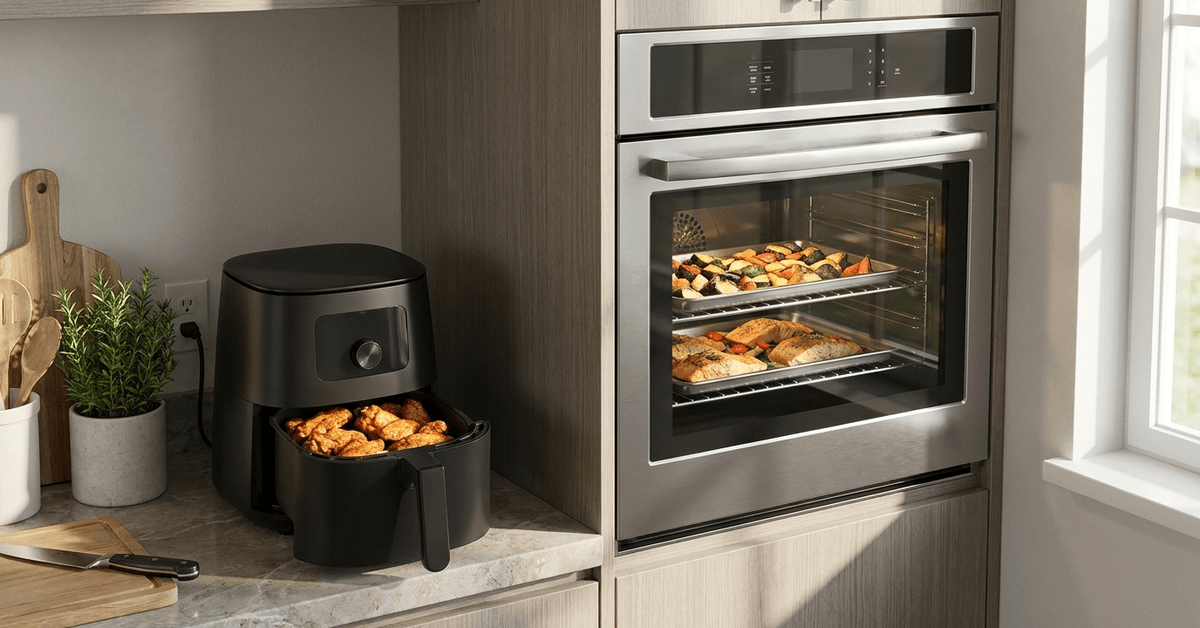
Choosing between an airfryer and a convection oven often comes down to energy use and everyday cooking needs. Both appliances circulate hot air, but their size and operating patterns differ.
This guide compares power consumption, cooking time, batch capacity, maintenance, and typical household costs. It also explains which appliance may deliver better efficiency for different meal sizes and routines.
Understanding How Each Appliance Works
Both appliances rely on moving hot air to cook food more evenly than still-air methods. Their biggest design difference is the size of the cooking chamber and how quickly that space heats.
How Airfryers Circulate Heat?
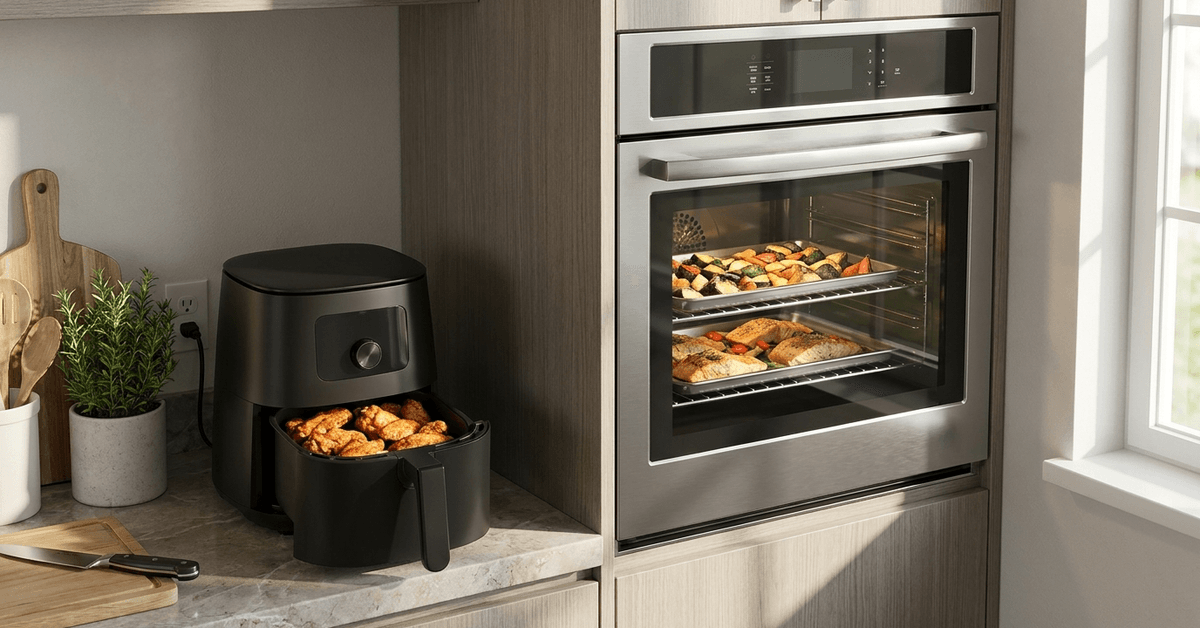
Airfryers combine a heating element with a high-speed fan inside a compact cooking chamber. Hot air moves rapidly around food held in a perforated basket, helping exposed surfaces brown and crisp.
The smaller chamber generally reaches cooking temperature quickly, supporting shorter cooking cycles for modest portions.
How Convection Ovens Cook
Convection ovens use an oven heating system plus a fan to distribute heated air throughout a larger cavity. Their spacious interiors can accommodate multiple dishes or trays at the same time.
Because more space must be heated, preheating time can become a larger part of energy use for small meals.
Electricity Consumption and Typical Wattage
Rated wattage shows how much power an appliance can draw while operating, but total energy use also depends on runtime. Comparing wattage and duration provides a more useful picture than looking at wattage alone.
Airfryer Energy Usage
Many airfryers operate between roughly 800 and 2,000 watts, depending on size and features. A standard 4-quart model may draw about 1,400 watts while cooking for 15 to 25 minutes.
Shorter runtimes and a smaller heated space can make airfryers efficient for single servings or smaller batches.
Convection Oven Energy Patterns
Convection ovens commonly use more power because they heat a larger oven cavity. A mid-size electric model may draw around 2,400 watts, while larger units can use more depending on settings.
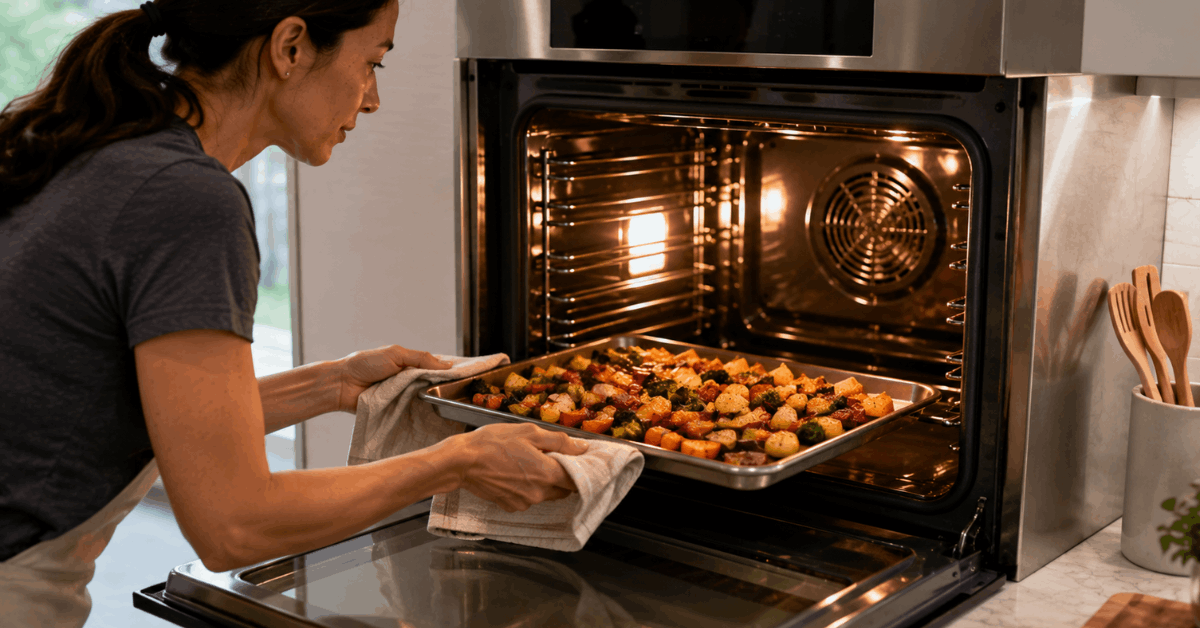
Preheating for 10 to 15 minutes can increase total energy use when only a small amount of food is being prepared.
Real-World Cooking Efficiency
Energy efficiency changes with the amount of food being cooked and how fully the appliance is used. Small meals often favor an airfryer, while larger batches can make better use of a convection oven.
Batch Cooking: Family Meals vs. Singles
Airfryers are especially practical for single portions or small meals because little empty space is heated.
Convection ovens become more competitive when several trays or a larger family meal cook together. Using the full available capacity helps spread energy consumption across more servings.
Cooking Time Comparison
Cooking times vary by appliance, food size, and temperature, but airfryers often finish small portions more quickly. The following examples illustrate typical differences rather than guaranteed times.
- Chicken wings: Airfryer, about 22 minutes; convection oven, about 30–35 minutes
- Frozen fries: Airfryer, about 16 minutes; convection oven, about 25 minutes
- Baked fish: Airfryer, about 14 minutes; convection oven, about 22 minutes
Factors That Affect Energy Efficiency
Appliance efficiency depends on more than the wattage printed on the label. Preheating, batch size, food arrangement, and cooking frequency all influence real household consumption.
Preheating Requirements
Convection ovens commonly need more time to bring the full cavity to the target temperature. Some airfryers require little or no preheating for certain foods because the chamber is smaller. Skipping or shortening this stage can reduce overall cooking time for quick meals.
Batch Size and Fill Rate
A convection oven can be efficient when several portions cook during one full-capacity session.
An overcrowded airfryer, however, may block airflow and extend the cooking cycle. Leaving enough room around food supports consistent circulation and avoids repeated batches.
Lifespan, Maintenance, and Appliance Costs
Energy use is only one part of long-term value because maintenance and replacement also affect household costs. Keeping airflow components clean helps both appliances perform as intended.
Airfryer Durability Tips
Regular cleaning helps prevent grease from interfering with baskets, heating areas, and airflow. These basic habits support reliable performance and protect removable surfaces.
- Clean the basket after regular use to prevent oil buildup.
- Avoid metal utensils on nonstick surfaces.
- Inspect the heating area for loose food debris.
- Keep vents free from grease and dust.
For an example of a current model, Philips offers a 2000 Series Airfryer with a compact 4.2-liter cooking chamber and RapidAir technology. This illustrates how compact appliance design supports quick countertop cooking.
Convection Oven Care Guidelines
Convection ovens benefit from keeping the cavity, fan area, and door seal free from heavy buildup. Regular inspection helps limit avoidable heat loss during cooking.
- Wipe the oven cavity after spills have cooled.
- Keep the convection fan area free from visible debris.
- Inspect door seals for damage or gaps.
- Avoid blocking interior airflow with oversized cookware.
Cost of Use: An Energy Bill Perspective
Electricity cost depends on the appliance wattage, cooking time, and your local utility rate. A short airfryer cycle may cost less than heating a large oven for one small dish.
The original comparison estimates about $0.18 for a typical airfryer meal and roughly $0.24 to $0.32 for a similar convection-oven task. For large family meals, one full oven cycle may cost less than running several separate airfryer batches.
Key Points for Choosing the Right Appliance
The most efficient choice depends on how much food you normally prepare and how quickly you need it. Consider batch size, kitchen space, and maintenance alongside energy use.
- Airfryer: Strong choice for small portions, quick cooking, and minimal preheating.
- Convection oven: Better suited to large meals and multi-tray cooking.
- Compare rated wattage and normal cooking time for your favorite recipes.
- Consider whether several airfryer batches would be needed.
- Factor in available counter or cabinet space.
- Maintain either appliance so airflow remains unobstructed.
Conclusion
Airfryers often provide better energy efficiency for quick, small-batch cooking because they heat a compact chamber for a shorter period. Convection ovens can become more efficient per serving when their larger capacity is used for family meals or multiple dishes.
Preheating, cooking time, food arrangement, and maintenance all influence real electricity use. Choosing according to everyday cooking habits offers the most practical balance of efficiency, convenience, and meal capacity.