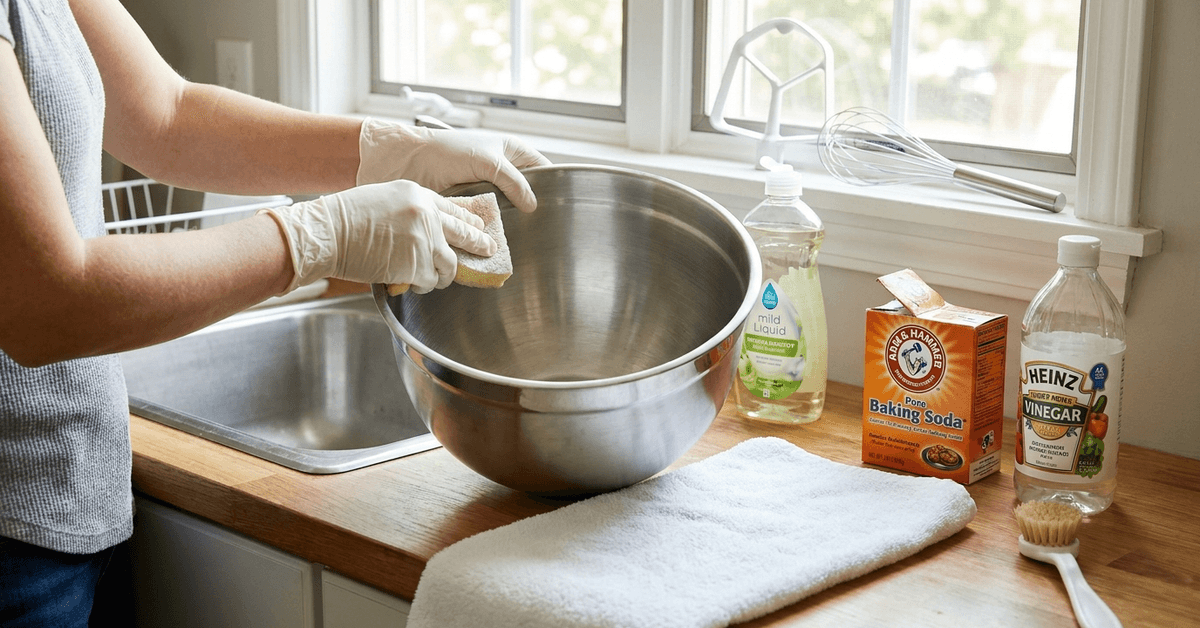
Ice cream maker bowls need gentle routine cleaning after every batch. This guide explains how to wash, dry, deodorize, and store the bowl safely.
It also covers safe cleaning agents, common mistakes, maintenance, and wear checks. These steps help protect freezing performance and keep desserts fresh.
Why Cleaning the Bowl Properly Matters?
Regular cleaning removes sugar, dairy residue, and lingering flavors that can affect later batches. Careful maintenance also protects the bowl surface and supports consistent freezing results.
Understanding the Material and Design
Many standalone freezer bowls use double-wall construction with freezing liquid sealed between the walls. Materials vary by model, so cleaning should follow the manufacturer’s instructions.
Typical Parts That May Need Separate Cleaning
Several removable components collect ice cream residue during churning. Cleaning compatible parts separately helps prevent odors and sticky buildup.
- Bowl with sealed freezing liquid
- Dasher or paddle
- Lid
- Drive shaft or locking mechanism
A Cuisinart freezer bowl is a model-specific replacement bowl, so cleaning should match the exact machine.
Step-by-Step: The Best Way to Clean a Standalone Ice Cream Maker Bowl
A simple sequence removes residue while protecting the freezing bowl structure. Work gently throughout each cleaning stage.
1. Let the Bowl Return to Room Temperature
Let the bowl warm naturally after use before routine hand cleaning. Washing a deeply frozen bowl with warmer water can create unnecessary temperature stress. Wait until frozen residue softens enough for gentle removal.
2. Rinse Off Excess Ice Cream or Mix
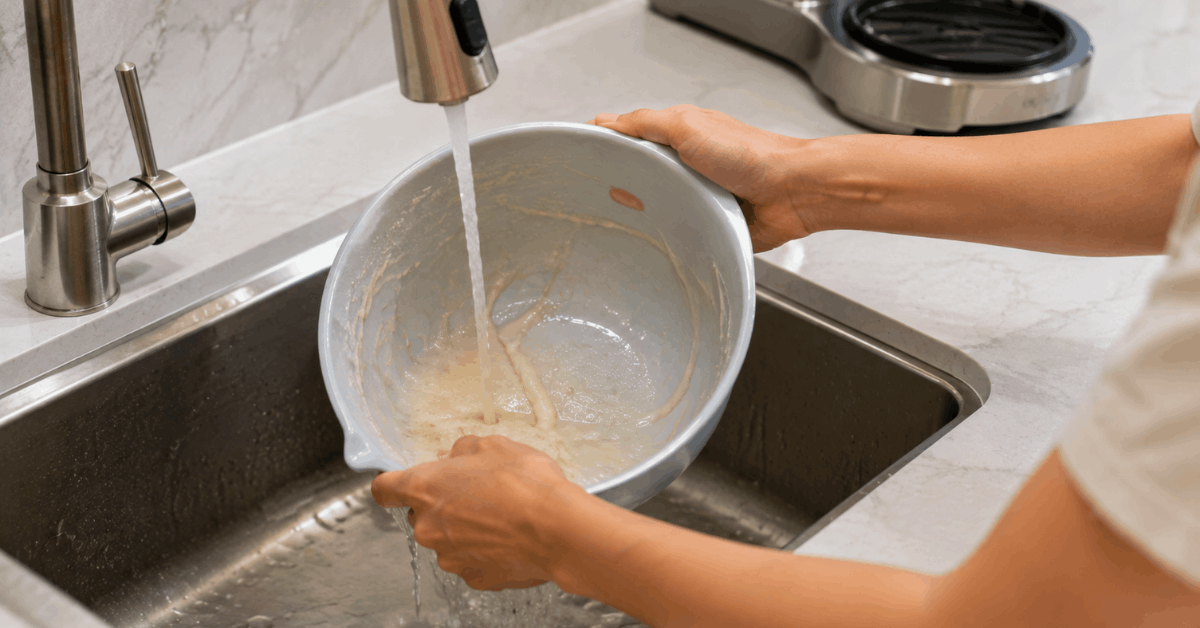
Rinse loose residue with cool or lukewarm water when permitted. Rotate the bowl so water reaches the bottom, sides, and rim. Avoid very hot water because it may affect coatings or sealed construction.
3. Clean Gently With a Soft Cloth or Non-Abrasive Sponge
Use mild dish soap with a soft sponge or cloth to remove sugar and cream residue. Focus on seams, corners, and the upper rim where buildup collects. Light pressure protects the interior bowl surface from scratches.
4. Avoid Soaking the Bowl
Do not leave a sealed freezer bowl submerged for long periods unless the manufacturer permits soaking. Extended immersion may be unsuitable for some designs or seams. Hand washing gives better control over water exposure.
5. Dry Thoroughly Before Storage
Dry the bowl completely with a clean lint-free towel after rinsing. Check the rim, underside, and recessed areas for remaining droplets. Complete drying helps prevent unwanted freezer ice later.
Pro Tips for Best Results
Extra care can address persistent residue or odors that normal washing misses. Test optional household cleaners against the manufacturer’s guidance.
Addressing Persistent Odors
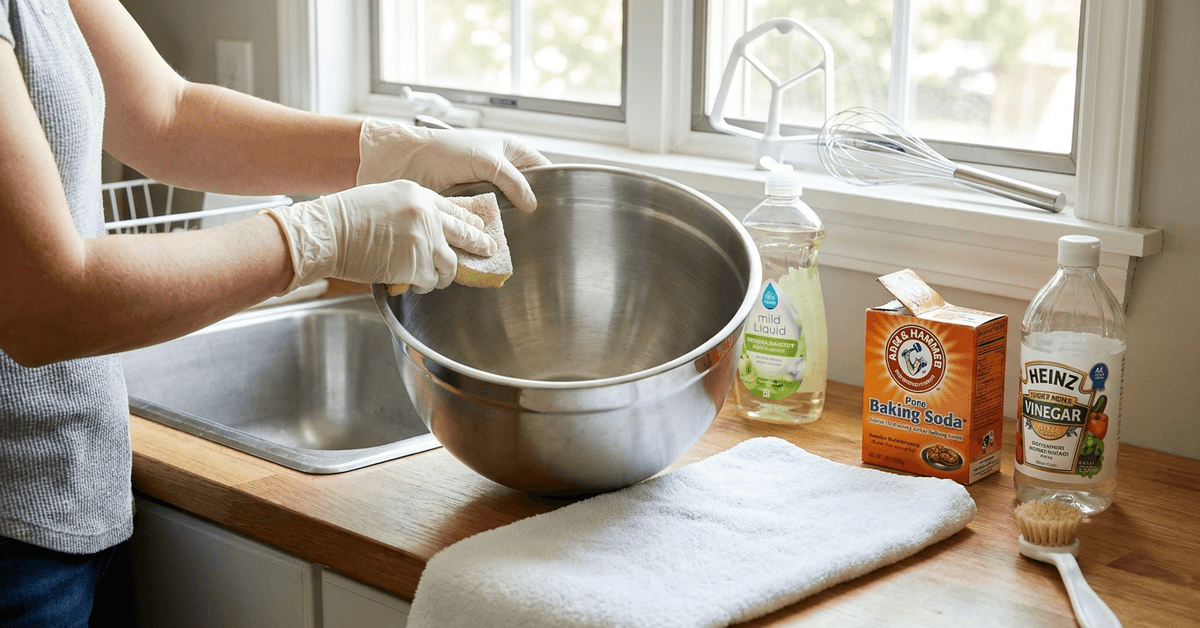
A mild baking soda mixture may help with lingering food odors on compatible surfaces. Apply a small amount with a soft cloth without abrasive rubbing. Rinse thoroughly so no powdery residue remains.
Dealing With Sticky Build-Up
Sticky sugar or cream films usually respond to mild dish soap and patient wiping. If diluted vinegar is permitted, use a small amount on a soft cloth. Rinse promptly to prevent vinegar scent or residue.
Regular Maintenance Suggestions
A regular routine keeps removable components cleaner and makes cleanup faster. Inspect the bowl and accessories while washing.
- Wash removable parts after each use.
- Deep-clean compatible accessories periodically.
- Wipe sticky drips from the exterior.
- Inspect seams and rims.
- Dry every part before storage.
Common Mistakes to Avoid
Incorrect cleaning can damage coatings, seals, or surfaces and shorten bowl life. Gentle hand cleaning is the safest default unless the manual permits another method.
- Using hot water on a frozen bowl
- Dishwashing without approval
- Scrubbing with steel wool
- Using sharp tools on residue
- Storing the bowl wet
- Forcing frozen residue away
Safe Cleaning Agents to Use
Choose simple products that remove residue without strong chemical traces. Use only cleaners compatible with the bowl material.
- Mild dish soap
- Baking soda for compatible odor treatment
- Diluted white vinegar when permitted
- Cool or lukewarm rinse water
Avoid bleach, strong solvents, and abrasive cleaning powders. Harsh products may damage finishes or leave unwanted residue.
How to Store the Bowl After Cleaning?
Storage should keep the bowl dry, clean, and protected from dust or impact. Follow the manufacturer’s instructions for long-term placement.
- Dry completely before storage.
- Store upright when practical.
- Keep heavy objects away.
- Use a clean towel for dust protection.
- Never seal a damp bowl in plastic.
Maintaining Bowl Performance Long-Term
Good handling protects freezing capability and bowl condition over repeated use. Follow recommended freezing and storage practices consistently.
Protecting Freezing Capability
Freeze the bowl only after it is completely clean and dry. Follow the recommended freezing time and temperature before making another batch. Avoid repeated extreme temperature changes because gradual handling is gentler on materials.
Checking for Wear and Tear
Inspect the bowl for cracks, dents, or leaks along walls and seams. Stop using it if freezing liquid leaks or structural damage appears. A damaged freezer bowl should be replaced rather than repaired at home.
Recording Cleaning Routines
A maintenance note can help frequent users remember deep-cleaning and inspection dates. Recording occasional deeper cleaning keeps maintenance easy to track. A simple routine keeps care tasks consistent.
FAQs: Practical Answers for Daily Cleaning
These questions cover everyday bowl care after making frozen desserts. Use the product manual when its directions differ from general guidance.
Can I Use the Dishwasher for My Ice Cream Maker Bowl?
Dishwasher compatibility depends on the specific freezer bowl model. Some accessories may tolerate machine washing while the bowl requires hand washing. Check the manual before exposing it to high heat or detergent cycles.
What If I Forget to Clean the Bowl Immediately?
Dried residue can usually be softened with cool or lukewarm water and mild soap. Let it loosen before wiping instead of scraping. Avoid long soaking unless the manufacturer specifically approves it.
Should I Clean the Bowl Before Every Use?
A clean, dry bowl usually needs only a quick visual inspection before use. Wipe away dust with an appropriate clean cloth if necessary. Ensure the bowl is fully dry before freezing again.
Conclusion: Efficient Cleaning for Performance and Durability
Proper cleaning helps preserve ice cream quality and dependable bowl performance. Gentle washing, thorough rinsing, and complete drying reduce residue and odors.
Regular inspections help identify wear or damage before another batch. With simple consistent care, the bowl stays ready for homemade desserts.