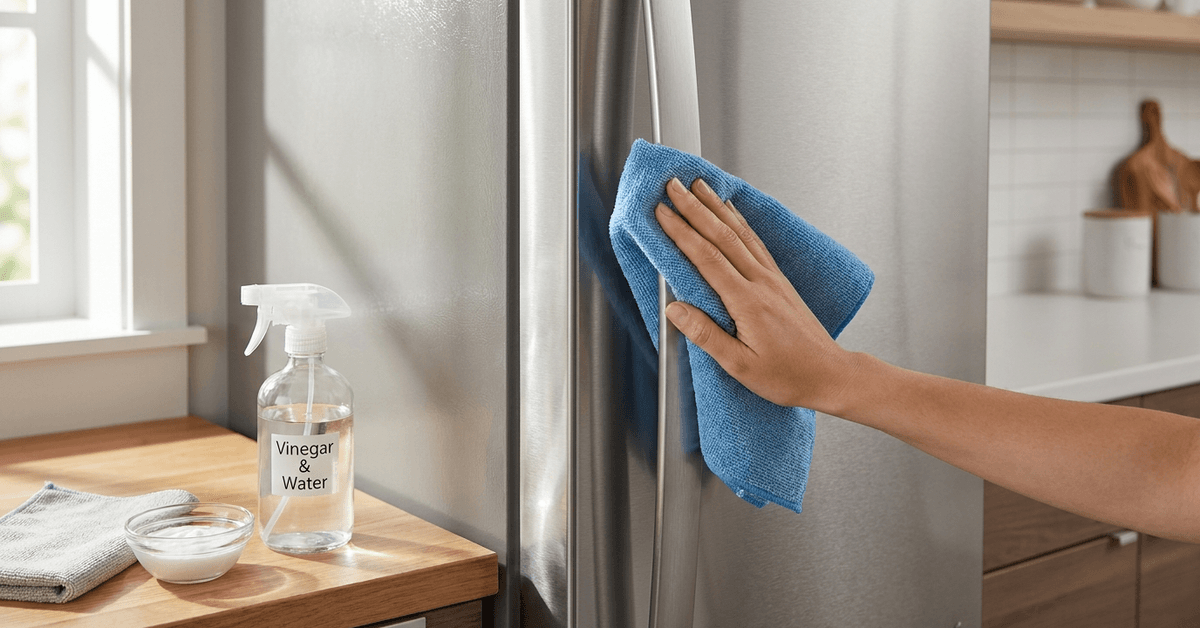
Stainless steel appliances create a clean, modern appearance, but fingerprints and streaks can dull the finish. This guide explains safe cleaning methods, useful supplies, and ways to maintain shine.
It also covers problem areas, natural alternatives, common mistakes, and routines. These steps can help keep stainless steel bright and polished without harsh scrubbing.
Understanding Stainless Steel Surfaces
Stainless steel appliances may have brushed or polished finishes that respond differently to cleaning. Identifying the surface grain before wiping helps reduce visible marks.
Brushed steel shows cross-grain streaks, while polished surfaces reveal fingerprints easily. Cleaning in the grain direction creates a more uniform appearance. Check the manual for finish-specific requirements before using a new product.
Why Streaks Appear on Stainless Steel?
Streaks commonly result from excess cleaning liquid, soap residue, mineral deposits, or wiping against the grain. Fingerprints and cooking oils can also leave uneven patches after incomplete cleaning.
Too much cleaner may dry into residue. Tap water can leave mineral spots as droplets evaporate. A clean dry cloth helps remove remaining moisture.
Essential Supplies for Streak-Free Results
Simple household supplies are usually enough for routine stainless cleaning. Choose soft materials and products that match manufacturer recommendations.

- Microfiber cloths: Soft, lint-free options for wiping and polishing
- Mild dish soap
- White vinegar, when approved
- Distilled water
- Spray bottle
- Specialized stainless steel cleaner
- Baking soda for compatible stubborn spots
A product such as Weiman Stainless Steel Cleaner & Polish is designed for stainless steel surfaces. Confirm finish compatibility before treating the entire appliance.
Preparation Before Cleaning
Preparation helps prevent surface scratches and limits moisture near sensitive areas. Check manufacturer guidance, then remove loose residue before applying cleaning solution.
Lift crumbs with a damp microfiber cloth instead of dragging them across steel. Follow the finish lines while wiping. Keep liquids away from electrical controls.
Step-by-Step Cleaning Process
A consistent sequence makes streak-free cleaning easier. Begin gently and use stronger treatments only when visible residue remains.
Daily Wipe-Down for Routine Care
Daily cleaning works well for light fingerprints and fresh splashes. A lightly damp microfiber cloth followed by immediate drying is usually enough.
- Moisten a microfiber cloth with distilled water and wring it well.
- Wipe gently in the direction of the stainless steel grain.
- Buff immediately with a separate dry microfiber cloth.
Cleaning Heavier Smudges and Prints
Heavier fingerprints may require mild soapy water instead of plain water. Work in sections so cleaner does not dry and leave new streaks.
- Mix a few drops of mild dish soap with warm distilled water.
- Dampen a microfiber cloth and remove excess liquid.
- Wipe along the grain around doors and handles.
- Follow with a cloth dampened with plain distilled water.
- Buff dry to remove soap residue.
Removing Stubborn Spots and Streaks
Persistent marks may need a targeted cleaning method after routine wiping fails. Test vinegar or baking soda first and confirm finish compatibility.
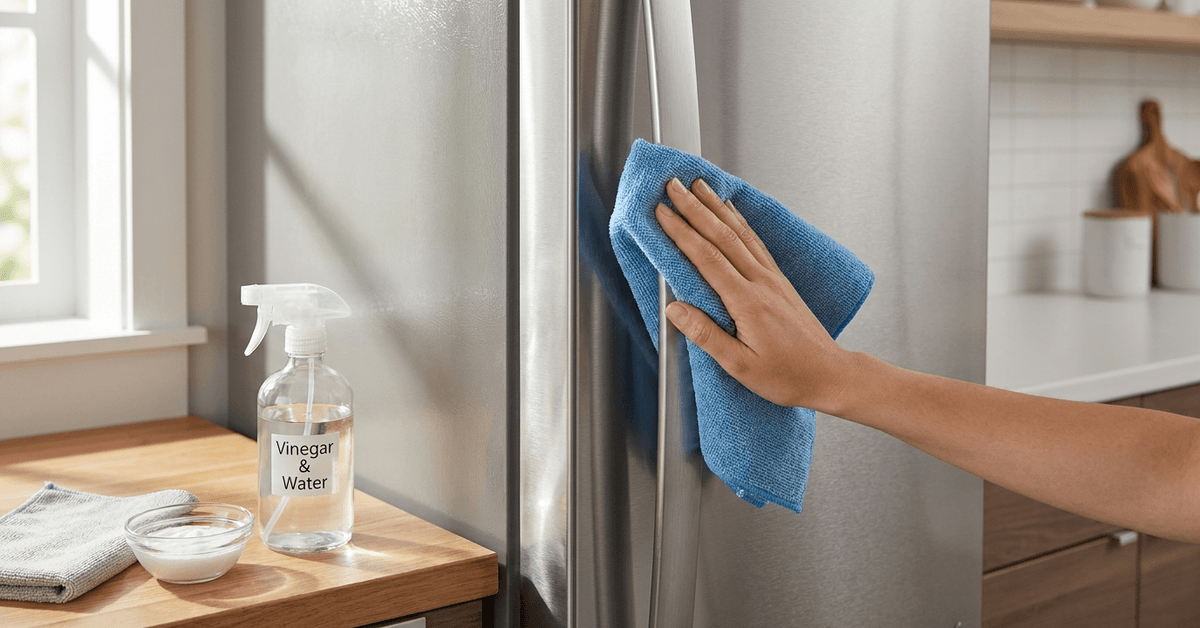
- Prepare a 1:1 mixture of white vinegar and distilled water if approved.
- Apply a small amount to the cloth instead of displays or seams.
- Wipe gently in the direction of the surface grain.
- Follow with a water-dampened cloth if needed.
- Buff dry with a fresh microfiber cloth.
Baking soda may loosen stuck-on residue on compatible finishes. Use gentle pressure because abrasion can alter the surface appearance. Stop if scratching appears.
Expert Tips for a Streak-Free Finish
Small technique changes can improve polishing results across appliance panels. Controlled moisture and a clean final cloth help prevent residue transfer.
- Keep one microfiber cloth damp and one dry for polishing.
- Use distilled water when tap water leaves mineral spots.
- Apply only a small amount of cleaning solution.
- Do not let wet cleaner dry on steel.
- Apply commercial cleaner to the cloth when directions permit.
Natural Cleaning Alternatives
Some households prefer simple cleaning solutions instead of specialty products. Use natural options only when the manufacturer permits them.
Diluted vinegar may remove light residue from compatible surfaces. A tiny amount of oil can provide light polishing, but too much may leave a film. Remove excess if the surface becomes greasy or streaky.
Areas Prone to Streaks and How to Address Them
High-touch areas need more frequent attention than broad panels. Handles, seams, and dispensers collect different residues, so cleaning should match the specific problem.
Control Panels and Handles
Handles and controls collect finger oils and smudges during use. Wipe them with damp microfiber and an approved cleaner without saturating openings. Finish dry to prevent visible moisture marks.
Seams and Edges
Narrow seams collect crumbs and grime that broad wiping may miss. A cotton swab or folded microfiber corner can reach these spaces. Avoid saturating edges because excess moisture may enter gaps.
Water Dispensers and Drip Trays
Water dispensers may develop mineral deposits from repeated splashing. Wipe fresh droplets before spots form. For stubborn buildup, use an approved descaling method.
Avoiding Common Cleaning Pitfalls
Incorrect tools can leave scratches, residue, or lint on stainless steel. Gentle materials and controlled moisture help protect the decorative finish.
- Avoid abrasive scrub pads and steel wool.
- Do not use dirty cloths containing grit.
- Limit excess water near seams and controls.
- Avoid unapproved bleach, ammonia, or oven cleaners.
- Never scrub aggressively across the surface grain.
Maintaining the Finish Long-Term
Routine spot cleaning keeps fingerprints and grease manageable. Keeping a clean microfiber cloth nearby makes quick touch-ups easier.
Optional polish can be used when permitted. Buff thoroughly so product residue does not create streaks. Regular checks can reveal surface damage early.
Recommended Cleaning Routine Schedule
A simple schedule keeps stainless steel care manageable. Adjust the timing according to visible buildup and appliance use.
- Daily: Wipe fingerprints or splashes with damp microfiber.
- Weekly: Use mild dish soap when grease buildup appears.
- Monthly: Apply an approved stainless steel polish if desired.
Safety Considerations
Protecting electrical components also matters when maintaining the stainless steel finish. Avoid spraying liquids directly onto controls, vents, door edges, or sensitive openings.
Do not mix chemicals or use unapproved bleach and ammonia. Follow product label directions and ventilate when needed. Use the manual as the primary cleaning guide.
Conclusion: Achieving a Consistently Streak-Free Look
Keeping stainless steel appliances streak-free depends on gentle materials, limited moisture, and consistent wiping. Following the grain and finishing with a dry microfiber cloth helps prevent residue and water marks.
Regular spot cleaning also reduces the need for aggressive treatments that may damage the finish. With a predictable care routine, stainless steel can remain polished with less effort.