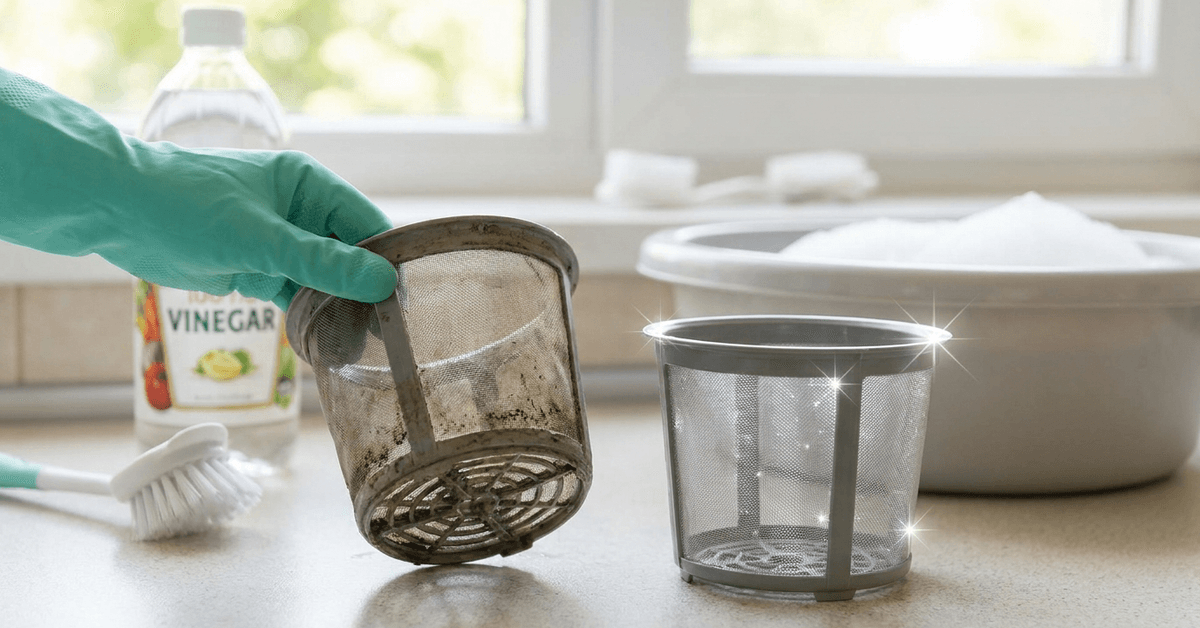
Every dishwasher relies on a filter to capture food debris and residue before they interfere with normal operation. Over time, grease and particles can collect on the filter and reduce effective water movement.
This guide explains how to deep clean dishwasher filters safely, from removal and soaking to reassembly. It also covers filter types, warning signs, cleaning frequency, common mistakes, and routine maintenance tips.
Understanding the Role of the Dishwasher Filter
The dishwasher filter screens food particles and debris from wash water and helps keep larger scraps away from internal components.
Most removable filters sit near the tub bottom, where they support cleaner wash cycles by trapping material before it recirculates.
Types of Dishwasher Filters
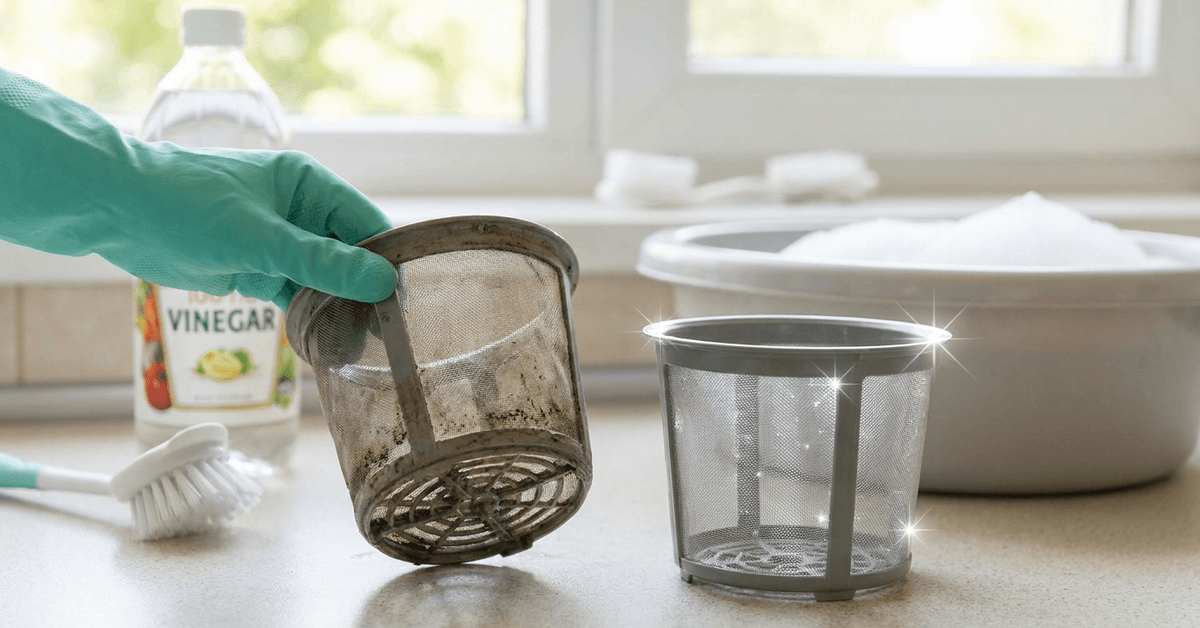
Dishwashers use different filter shapes, so the correct removal method depends on the model. Checking the manual first helps identify the specific filter system and prevents accidental damage.
- Fine mesh filters: Capture small particles and need gentle cleaning.
- Coarse cylindrical filters: Collect larger food pieces.
- Flat plate filters: Sit across part of the tub base.
- Combined filter assemblies: Use multiple removable sections.
Why a Deep Clean Outperforms Quick Rinses?
A quick rinse removes loose food, but oils, detergent residue, and hidden buildup can remain in mesh openings. Periodic deeper cleaning loosens this residue and supports consistent filtration performance without aggressive scrubbing.
Signs Your Filter Needs Deep Cleaning
Several symptoms can suggest routine rinsing is no longer enough. Inspect the filter when you notice recurring residue or odors after normal cycles.
- Persistent food odors after a cycle
- Dishes with visible residue
- Slimy or greasy buildup on the filter
- Food particles trapped in the mesh
- Slower-than-usual drainage
Step-by-Step Guide: Deep Cleaning a Dishwasher Filter
Start with the manufacturer’s care instructions because filter designs and approved cleaning methods vary. A careful sequence protects the filter and surrounding components while removing buildup.
1. Preparation and Safety Measures
Prepare the dishwasher after the cycle has ended and the interior has cooled. Gather the basic cleaning supplies before removing parts.
- Follow the manual for safe filter access.
- Let hot surfaces and water cool.
- Gather mild dish soap, a soft brush, microfiber cloth, and bowl.
- Use vinegar only if the manufacturer permits it.
- Avoid abrasive cleaners and metal tools.
A current Bosch 800 Series dishwasher is one example where owners can consult model documentation before cleaning removable parts.
2. Removing the Filter Unit
Move the lower rack so the filter area is accessible. Observe how each piece sits before removal to simplify reinstallation.
- Locate the filter near the tub bottom.
- Follow the marked unlocking direction.
- Lift removable sections gently.
- Note the position of screens or cylinders.
- Stop and check the manual if a part resists.
3. Initial Rinse and Debris Removal
Rinsing first removes loose scraps before deeper cleaning. Use warm running water and gentle pressure to protect fine mesh.
- Hold the removable filter under warm water.
- Remove food particles with a soft brush.
- Clean separate removable sections individually.
- Brush gently along mesh openings.
- Avoid knives, wire brushes, and abrasive pads.
4. Deep Cleaning Soak
A short soak can soften grease and stubborn food residue that does not rinse away. Use mild soapy water unless the appliance instructions approve another solution.
- Fill a bowl with warm water and mild dish soap.
- Submerge filter parts approved for soaking.
- Leave them for about 15 to 20 minutes.
- Gently brush softened deposits.
- Repeat if buildup remains.
- Rinse thoroughly.
5. Cleaning the Filter Housing Area
While the filter is out, inspect the surrounding area for visible trapped debris. Clean accessible surfaces without disturbing pumps, seals, or fixed components.
- Wipe the filter opening with a damp microfiber cloth.
- Remove loose debris safely.
- Use a soft brush around accessible corners.
- Do not push objects into drains.
- Leave seals and fixed parts in place.
6. Reassembling and Testing
Reinstall every part in its original orientation. A properly seated filter should sit securely without excessive force.
- Rinse away all soap.
- Return each section to position.
- Lock the assembly as instructed.
- Replace the lower rack.
- Run a short rinse cycle if recommended.
- Check for unusual noises or drainage problems.
Common Mistakes to Avoid During Filter Cleaning
Filter cleaning works best when it remains gentle and consistent. Avoid methods that can damage mesh, plastic, or seals or complicate reassembly.
- Using steel wool or abrasive pads
- Forcing a resistant filter
- Skipping the manual before removal
- Leaving debris beneath the filter
- Using strong chemicals without approval
- Failing to lock the filter securely
- Ignoring damaged mesh or cracked parts
How Often Should You Deep Clean a Dishwasher Filter?
Cleaning frequency depends on appliance use and the amount of residue entering the tub. Regular inspection helps establish a practical cleaning schedule for your household.
- Heavy daily use: Inspect frequently and clean when buildup appears.
- Moderate use: Check monthly for grease or trapped debris.
- Light use: Clean less often if the filter remains clear.
- Heavily soiled loads: Inspect sooner when more food residue enters the machine.
Additional Tips for Maintaining Optimum Dishwasher Performance
Filter care works best as part of a broader dishwasher maintenance routine. Simple habits reduce debris and help washable components remain clear.
- Scrape heavy food residue before loading.
- Use manufacturer-recommended detergent.
- Inspect spray-arm openings for visible blockage.
- Wipe door edges and gaskets appropriately.
- Check the filter when odors or residue return.
- Follow model guidance for tub cleaning and descaling.
Conclusion: Lasting Benefits of Deep Cleaning Your Dishwasher Filter
Consistent filter care helps maintain cleaner wash performance and prevents heavy residue from accumulating unnoticed. Gentle rinsing, occasional soaking, and careful brushing make routine maintenance easier.
Following the appliance manual also protects delicate filter components during removal and reinstallation. A regular inspection habit helps catch buildup before it becomes harder to remove.