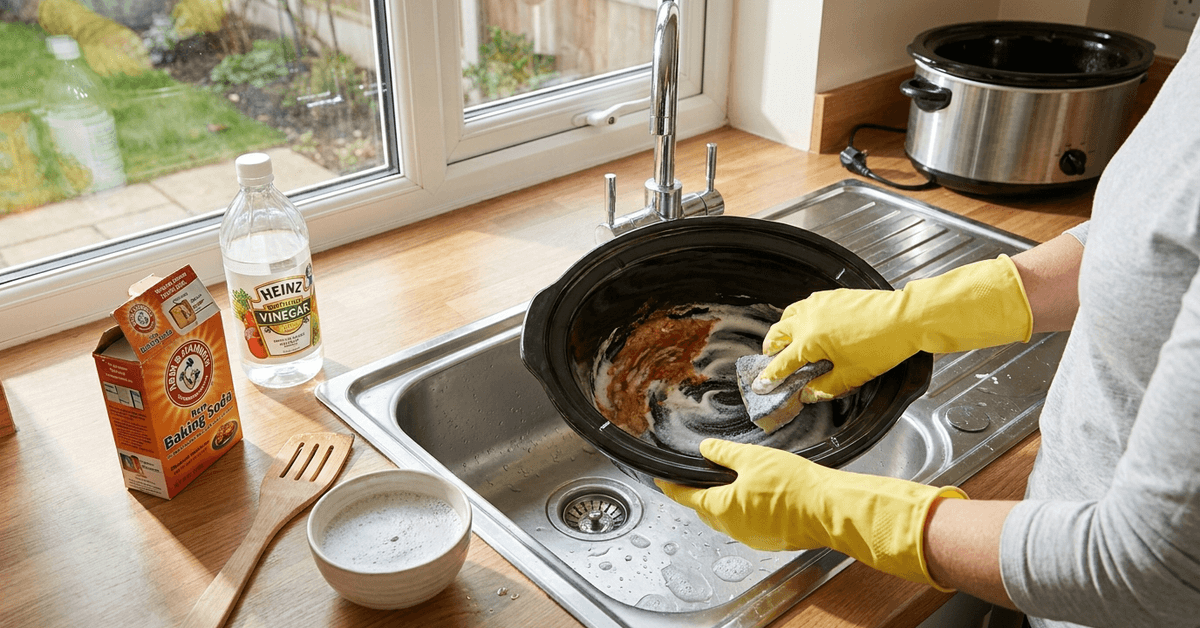
Slow cooker bowls can develop stubborn baked-on residue after long cooking sessions. This guide explains gentle ways to loosen, clean, and rinse stuck food.
It also covers safe cleaning tools, prevention, common mistakes, and replacement signs. These methods help protect the bowl surface while simplifying everyday cleanup.
Why Slow Cooker Bowls Get Baked-On Food Residue?
Food can stick when sauces thicken, sugars caramelize, or meals stay warm too long. Understanding these common residue causes makes cleanup easier.
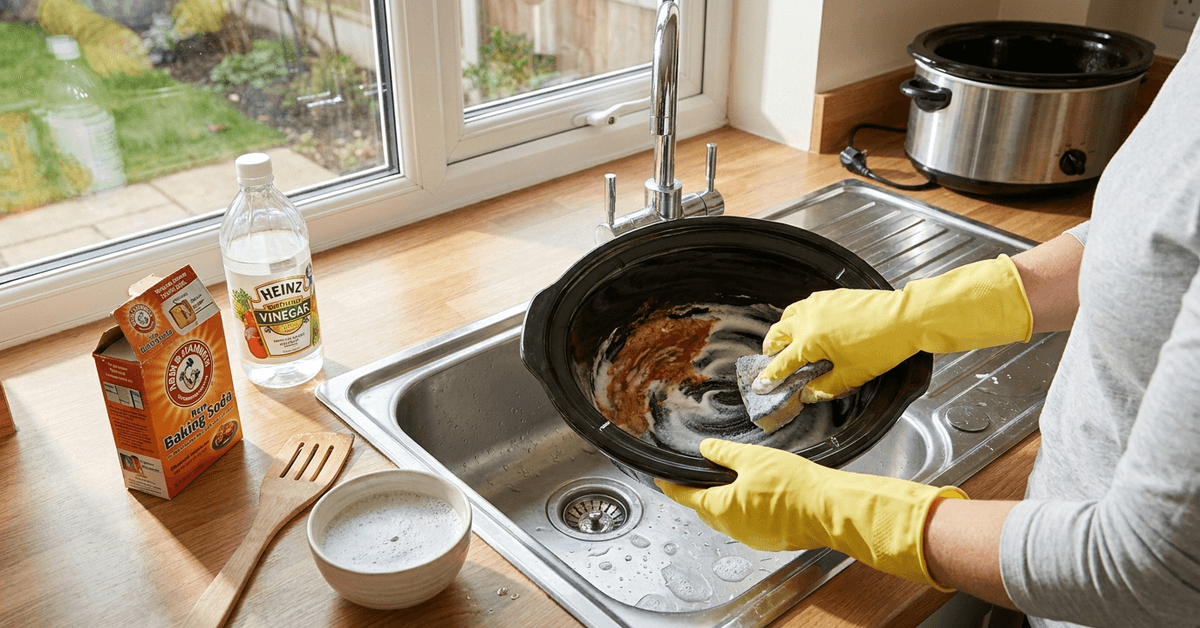
Common Causes
Several habits can leave hard food deposits around the bowl. Recognizing them early helps reduce the need for aggressive scrubbing later.
- High-sugar sauces, glazes, or jams caramelizing on the surface
- Long keep-warm cycles that dry sauces into a firm film
- Delayed soaking after serving
- Worn or damaged surfaces that catch food more easily
Benefits of Gentle Cleaning Methods
Gentle cleaning protects the ceramic or coated surface from scratches and wear. Mild techniques also make routine cleanup easier with inexpensive household supplies.
Protecting the Ceramic Surface
Ceramic slow cooker inserts are durable, but rough scrubbing tools can scratch or weaken glazed surfaces.
Food may become harder to remove once the smooth finish is compromised. Using low-abrasion cleaning methods helps preserve the bowl’s interior and appearance.
Recommended Tools and Natural Cleaners
Simple supplies can handle most baked-on residue without specialized equipment. Choose soft tools and cleaning agents that match the manufacturer’s instructions for your specific insert.
- Baking soda: Mild abrasive for compatible surfaces
- White vinegar: Useful for compatible sticky films and mineral residue
- Soft sponge or non-scratch cleaning pad
- Wooden or silicone spatula
- Mild liquid dish soap
- Clean microfiber cloth
A Crock-Pot slow cooker with removable stoneware shows why model-specific care instructions matter. Always follow the product manual for specific cleaning limits.
Step-by-Step Process: How to Remove Baked-On Food the Easy Way
Patience usually works better than heavy scrubbing pressure when food has dried firmly onto the bowl. Start with the mildest method and repeat only when visible residue remains.
Initial Soak
A warm soapy soak softens dried food and sauces before scrubbing. Allow extra soaking time for thick, sugary, or heavily cooked-on buildup.
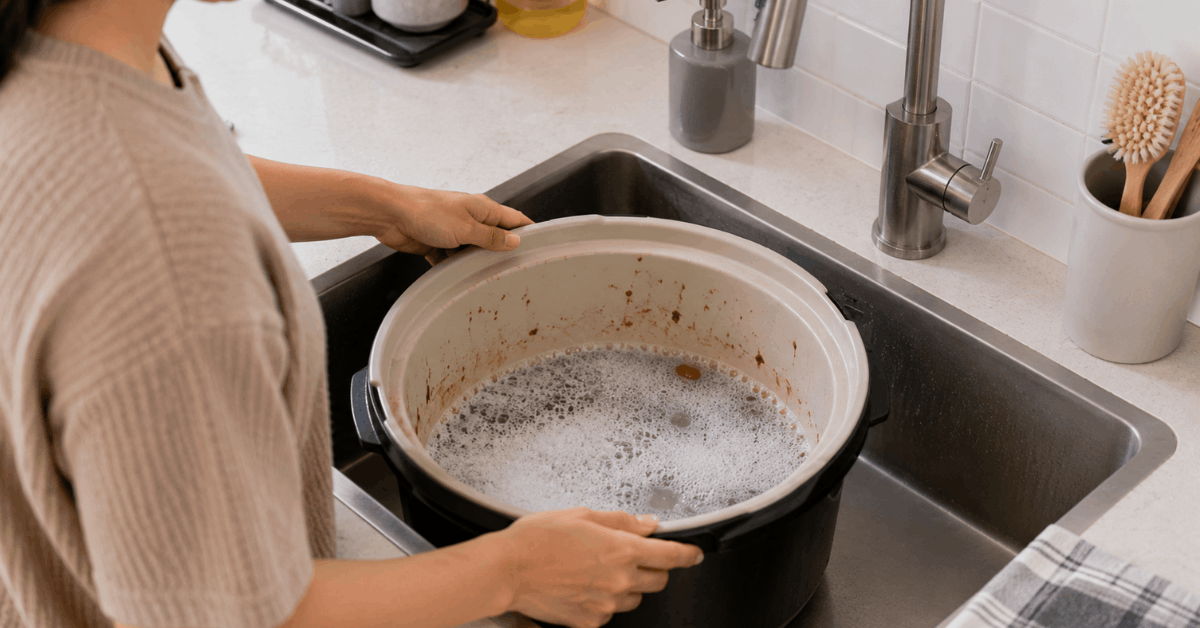
- Fill the cooled bowl with warm water.
- Add a small amount of mild dish soap.
- Let it soak for at least 30 minutes.
- Wipe gently with a soft sponge.
Baking Soda Paste Method
Baking soda provides mild cleaning action on compatible ceramic or stoneware. Keep pressure light so the paste loosens residue without unnecessarily abrading the finish.
- Mix three parts baking soda with one part water.
- Spread the paste over stuck-on areas.
- Let it rest for about 15 minutes.
- Wipe gently with a non-scratch sponge.
White Vinegar Trick
Diluted vinegar may loosen sticky films or mineral residue when permitted. Use the mixture at room temperature or as directed instead of heating it inside the slow cooker.
- Mix equal parts white vinegar and water.
- Add enough solution to cover the affected area.
- Let the cooled bowl soak briefly.
- Wipe softened residue with a soft sponge.
Dealing With Persistent Spots
Gentle repetition is safer than scraping stubborn deposits with metal tools. Give difficult residue additional time to soften before increasing pressure.
- Repeat the warm soapy soak.
- Apply another small amount of baking soda paste.
- Use a wooden or silicone spatula gently.
- Rinse between treatments.
- Stop if the surface shows scratching, cracks, or chips.
Things to Avoid When Cleaning Slow Cooker Bowls
Incorrect tools can cause scratches, coating wear, or thermal shock. Let the insert cool naturally before washing and follow only approved cleaning methods.
- Steel wool or metal scourers
- Sharp knives or metal scrapers
- Bleach or harsh chemical cleaners
- Cold water poured into a hot bowl
- Dishwasher cleaning when not rated dishwasher-safe
- Heavy scrubbing on glazed or coated surfaces
How to Prevent Future Baked-On Messes?
Small changes can reduce future stuck-on food. Prompt attention after serving also prevents sauces and starches from drying into hard layers.
Greasing the Bowl
A thin layer of cooking oil can reduce food sticking in some recipes when appropriate. It may help with sugary, cheesy, or thick mixtures that tend to cling to the sides. Use only a light coating so excess oil residue does not create another film to clean.
Avoiding ‘Warm’ Mode for Extended Periods
Long warm periods can keep drying sauces along bowl edges after active cooking ends. Transfer leftovers once warming is no longer needed. Follow the appliance manual when using keep-warm settings for longer periods.
Prompt Soaking
Adding warm soapy water after the bowl cools can soften fresh cooking residue before it hardens.
Even when full washing must wait, a short soak makes later cleaning easier. Avoid sudden temperature changes because gradual cooling helps protect ceramic and stoneware.
FAQs About Slow Cooker Bowl Cleaning
These questions cover routine slow cooker care and stubborn marks. Use the instructions supplied with the insert whenever they differ from general cleaning advice.
Can Slow Cooker Bowls Go in the Dishwasher?
Dishwasher safety depends on the specific removable insert and manufacturer instructions. Some stoneware bowls are dishwasher-safe, while other inserts may require or benefit from hand washing. Check the manual before exposing the bowl to dishwasher heat and detergent.
What if Stains Remain After Cleaning?
Some discoloration can remain after food residue is removed. Repeat an approved gentle method instead of switching to aggressive scrubbing or sharp tools.
Replace or inspect the insert if staining appears alongside deep cracks, chips, or surface damage.
Is It Safe to Use Commercial Cleaning Sprays?
Use commercial products only when approved for food-contact cookware. Strong cleaners may leave residue, odors, or marks on sensitive finishes. Mild dish soap is usually the simplest starting point for routine cleaning tasks.
When to Replace a Slow Cooker Bowl?
A slow cooker bowl should be replaced when it develops deep cracks, major chips, or other structural damage. Damaged bowls may heat unevenly or become unsafe during regular use.
Choose a replacement designed for the exact slow cooker model whenever possible. Proper fit and compatibility help maintain reliable heating and performance.
Conclusion
Gentle cleaning can remove baked-on slow cooker residue without aggressive scrubbing. Warm soapy water, compatible baking soda, and careful wiping make most cleanup easier.
Prompt soaking and sensible cooking habits can also reduce future stubborn buildup. With consistent bowl care, a slow cooker insert can remain cleaner, smoother, and easier to maintain.